
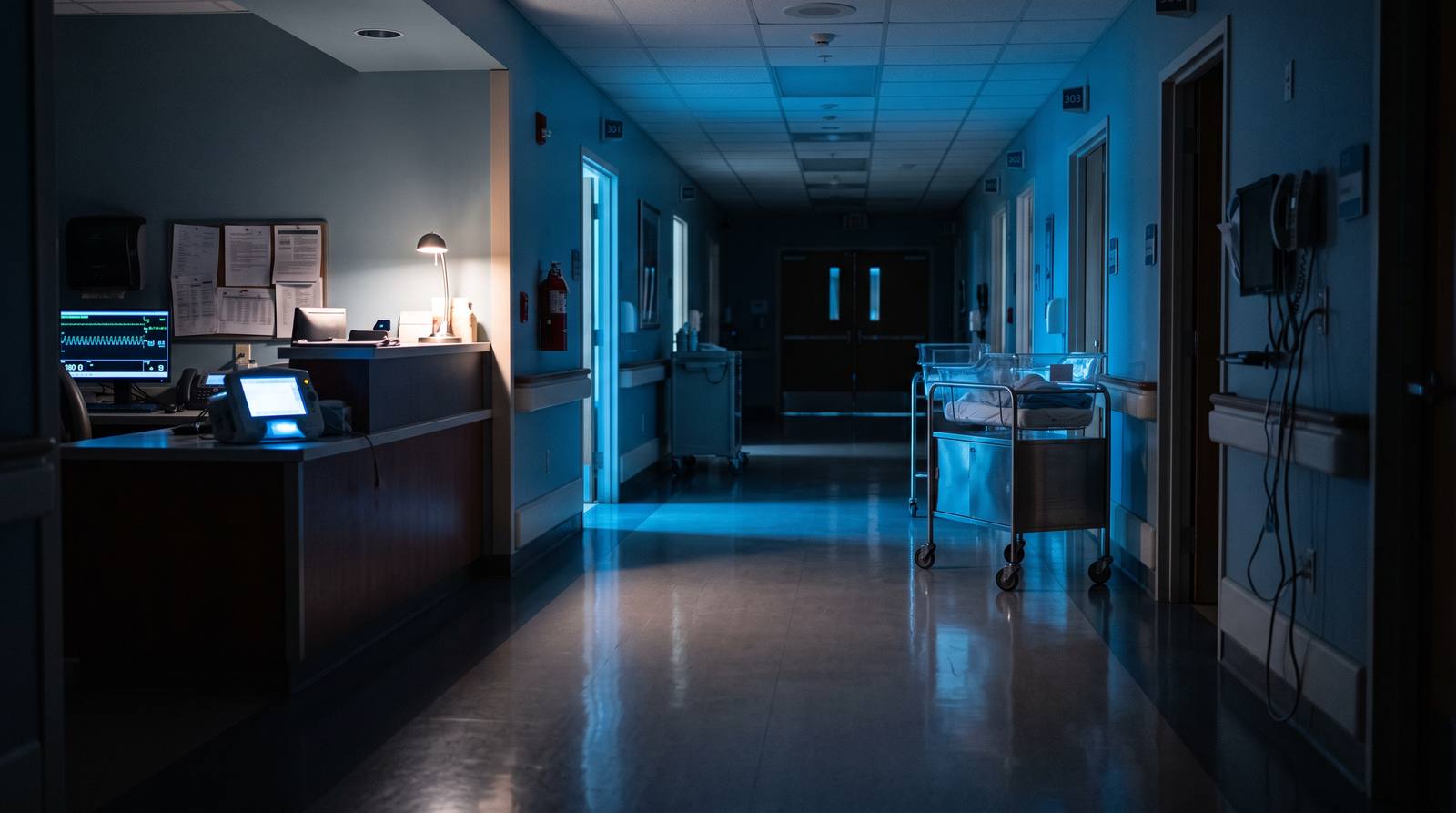

If you have searched for information about a birth injury lawsuit in California, you have probably run into the word MICRA. Families hear that “California caps malpractice cases” and assume it means their child’s case is worth little. That is not what the law says.
MICRA limits one category of damages, called non-economic damages. It does not limit the money needed to care for a child for life. This page explains what the cap is in 2026, how it grows every year, what falls outside it, and how attorney fees in these cases are fixed by statute.
Was your baby hurt during delivery?
Tell us your name and phone. We call you back today, in English or Spanish, and the consultation is free.
Free consultation · English y Español · No fee unless we win
What MICRA is
MICRA stands for the Medical Injury Compensation Reform Act, a package of California laws passed in 1975 that governs lawsuits against doctors, hospitals and other licensed health care providers for professional negligence. Its best-known piece is Civil Code § 3333.2, which sets a ceiling on non-economic damages. Other MICRA sections set the filing deadline, the 90-day notice, periodic payments and attorney fee limits, all covered below.
For decades the cap was frozen at $250,000. In 2022 the Legislature passed Assembly Bill 35, which rewrote § 3333.2 effective January 1, 2023, raising the cap, creating separate caps for different types of defendants, and building in automatic yearly increases. Those changes apply to cases filed on or after January 1, 2023, which covers every new birth-injury case today.
“Non-economic damages” are the human losses that do not come with a receipt. Civil Code § 3333.2(a) lists them: pain, suffering, inconvenience, physical impairment, disfigurement and other non-pecuniary damage. In a birth-injury case that means a child’s loss of the ability to walk, speak or play, and the daily reality of living with a disability.
The cap in 2026
Civil Code § 3333.2 sets the base amounts at $350,000 for injury cases and $500,000 for wrongful death, as of January 1, 2023. Subdivision (g) then raises the injury cap by $40,000 and the death cap by $50,000 every January 1 for ten years, until they reach $750,000 and $1,000,000 in 2033. Starting January 1, 2034, both amounts rise 2 percent a year for inflation under subdivision (h).
Counting forward from the 2023 base, the caps in 2026 are:
That last point matters in a child’s case. Because a minor’s claim can be filed up to the eighth birthday and may take years to resolve, the cap that ultimately applies is often higher than the cap on the day the child was born.
The cap is also not a single number for the whole case. Under § 3333.2(b), there is one limit for all health care providers together (for example, the obstetrician and the anesthesiologist), a second for all health care institutions together (the hospital), and a third for unaffiliated providers or institutions whose negligence was separate and independent. Subdivision (f) confirms these are three separate limits. Whether more than one applies depends on who was involved and how they are related.
- Injury (the child survives): $470,000 in non-economic damages.
- Wrongful death: $650,000 in non-economic damages.
- On January 1, 2027, these rise to $510,000 and $700,000.
- The amount that applies is the one in effect at the time of judgment, arbitration award or settlement, not the amount on the date of injury.
What is not capped
The cap in § 3333.2 applies only to non-economic losses. Economic damages have no cap in California. In a birth-injury case, economic damages are usually the largest part of the claim, because a child with a permanent disability may need care for sixty or seventy years.
These amounts are calculated by medical and economic experts through a life care plan. Two other MICRA provisions affect how they are presented and paid. Civil Code § 3333.1 lets the defendant introduce evidence of insurance and other benefits that paid for the child’s care, and bars those sources from recovering against the child. Code of Civil Procedure § 667.7 lets either side ask the court to pay future damages of $250,000 or more in periodic payments rather than a lump sum, with security required from a defendant who is not adequately insured. Neither reduces the child’s right to full economic recovery.
- Past and future medical care: hospital stays, surgeries, medications, specialists.
- Therapies: physical, occupational, speech and behavioral therapy, often for life.
- Equipment and technology: wheelchairs, braces, communication devices, feeding supplies.
- Home and vehicle modifications, and the cost of attendant or nursing care at home.
- Special education and vocational support.
- Lost earning capacity: the income the child would have earned as an adult.
How the cap applies in a birth-injury case
Put the pieces together and a birth-injury case in 2026 looks like this. The child’s non-economic damages are limited to $470,000 per category of defendant, and possibly more if unaffiliated providers were involved. The child’s economic damages, typically the bulk of the claim, are not limited. If the child did not survive, the family’s wrongful death claim is limited to $650,000 in non-economic damages, plus any economic losses.
Parents sometimes have claims of their own, such as a mother’s physical injuries from a mismanaged delivery. Under § 3333.2(d) and (e), each defendant is liable for non-economic damages in only one category, so the cap cannot be “stacked” by naming the same provider in several ways. How family members’ claims fit within the caps is a question an attorney analyzes at the start.
The practical lesson: MICRA makes documenting economic losses essential. A well-supported life care plan, backed by treating physicians and independent experts, is what allows a family to recover the full cost of the child’s care despite the cap.
Attorney fees under MICRA
California also limits what a lawyer may charge in a medical malpractice case. Under Business and Professions Code § 6146, as amended by AB 35, a contingency fee may not exceed 25 percent of the amount recovered if the case settles before a complaint or arbitration demand is filed, and 33 percent if the recovery comes after filing, whether by settlement, arbitration or judgment. If the case is tried or arbitrated, the attorney may ask the court for a higher percentage, but only by motion and only for good cause.
These limits apply whether the client is an adult or a child. “Recovered” means the net amount after litigation costs; medical bills and office overhead are not deductible costs. If future damages are paid periodically under Code of Civil Procedure § 667.7, the court places a total value on those payments to calculate the fee.
For families this means something simple: the fee percentages in a California birth-injury case are set by statute, not by negotiation.
How Beverly Law helps
Beverly Law handles birth-injury and medical malpractice cases for families throughout Los Angeles and California, in English and Spanish. From the first free consultation, we explain how the cap in Civil Code § 3333.2 applies to your child’s situation and, more importantly, how the uncapped economic damages are proven. We work with medical experts and life care planners to document every future need.
We also handle the procedural side: the 90-day notice under Code of Civil Procedure § 364, government claims for public hospitals, and the filing deadlines in § 340.5. There is no fee unless we win, and our contingency fee follows Business and Professions Code § 6146. Call 1 (877) 427-2752 to talk with us.
Free birth-injury case review
We review the delivery records with medical experts and tell you honestly whether there is a case. You pay nothing unless we win.
Questions parents ask
What is the MICRA cap in 2026?
Under Civil Code § 3333.2, non-economic damages in 2026 are capped at $470,000 in an injury case and $650,000 in a wrongful death case. The amounts increase every January 1 by $40,000 and $50,000 through 2033, then by 2 percent per year starting in 2034.
Does MICRA cap the cost of my child’s care?
No. The cap applies only to non-economic damages such as pain and suffering. Economic damages, including lifetime medical care, therapy, equipment, home modifications, attendant care and lost earning capacity, are not capped. In a birth-injury case these are usually the largest part of the claim.
Which cap amount applies: the one at birth or the one at settlement?
Civil Code § 3333.2(g) says the dollar amount in effect at the time of judgment, arbitration award or settlement applies. Because a child’s case can take years, the cap that ultimately applies is often higher than the cap on the date of the injury.
Can there be more than one cap in one case?
Yes. The statute sets separate limits for health care providers, health care institutions, and unaffiliated providers or institutions whose negligence was separate and independent. Section 3333.2(f) describes these as three separate limits. Whether more than one applies depends on the facts, and no single defendant pays in more than one category.
Does MICRA limit what a lawyer can charge?
Yes. Business and Professions Code § 6146 caps contingency fees at 25 percent of the net recovery if the case settles before a complaint is filed, and 33 percent after filing. A higher fee requires a court motion showing good cause. The limits apply to adults and children alike.
What are periodic payments?
Under Code of Civil Procedure § 667.7, if future damages are $250,000 or more, either side may ask the court to order them paid over time instead of in a lump sum. The court must specify the amounts and schedule, and a defendant who is not adequately insured must post security to guarantee the payments.
Does the cap apply to a wrongful death claim after a newborn’s death?
Wrongful death claims against health care providers are subject to the separate cap in § 3333.2(c), which is $650,000 in 2026 and increases each year. Economic losses are still recoverable without a cap. Whether a claim exists after a stillbirth depends on the facts and should be reviewed by an attorney.
Does MICRA apply if the hospital is public?
Yes. MICRA applies to any licensed health care provider or institution, including county and University of California hospitals. A public hospital also triggers the Government Claims Act, which requires a written claim within six months under Government Code § 911.2 before a lawsuit can be filed.
Ask a question
Not ready to call? Write your question and a member of our team answers you — no cost, no commitment.
MICRA: what California caps in a birth injury case, and what it does not — Beverly Law
Free case review for families in California. We obtain the delivery records, have them reviewed by medical experts and deal with the hospital and its insurer — you focus on your child. You pay nothing unless we win.
Related pages
Cerebral Palsy · Erb’s Palsy / Brachial Plexus Injury · HIE / Oxygen Deprivation at Birth · Statute of Limitations · California birth injury lawyers
Cities we serve
Los Angeles · Orange County · San Diego · Riverside · San Bernardino
Sources
Important: This page is general information about birth injuries and California law, not legal advice, and reading it does not create an attorney-client relationship with Beverly Law. Every case is different — talk to a lawyer about your own situation. Attorney advertising. Prior results do not guarantee a similar outcome. No fee unless we win. Last reviewed: 2026-09-18.