
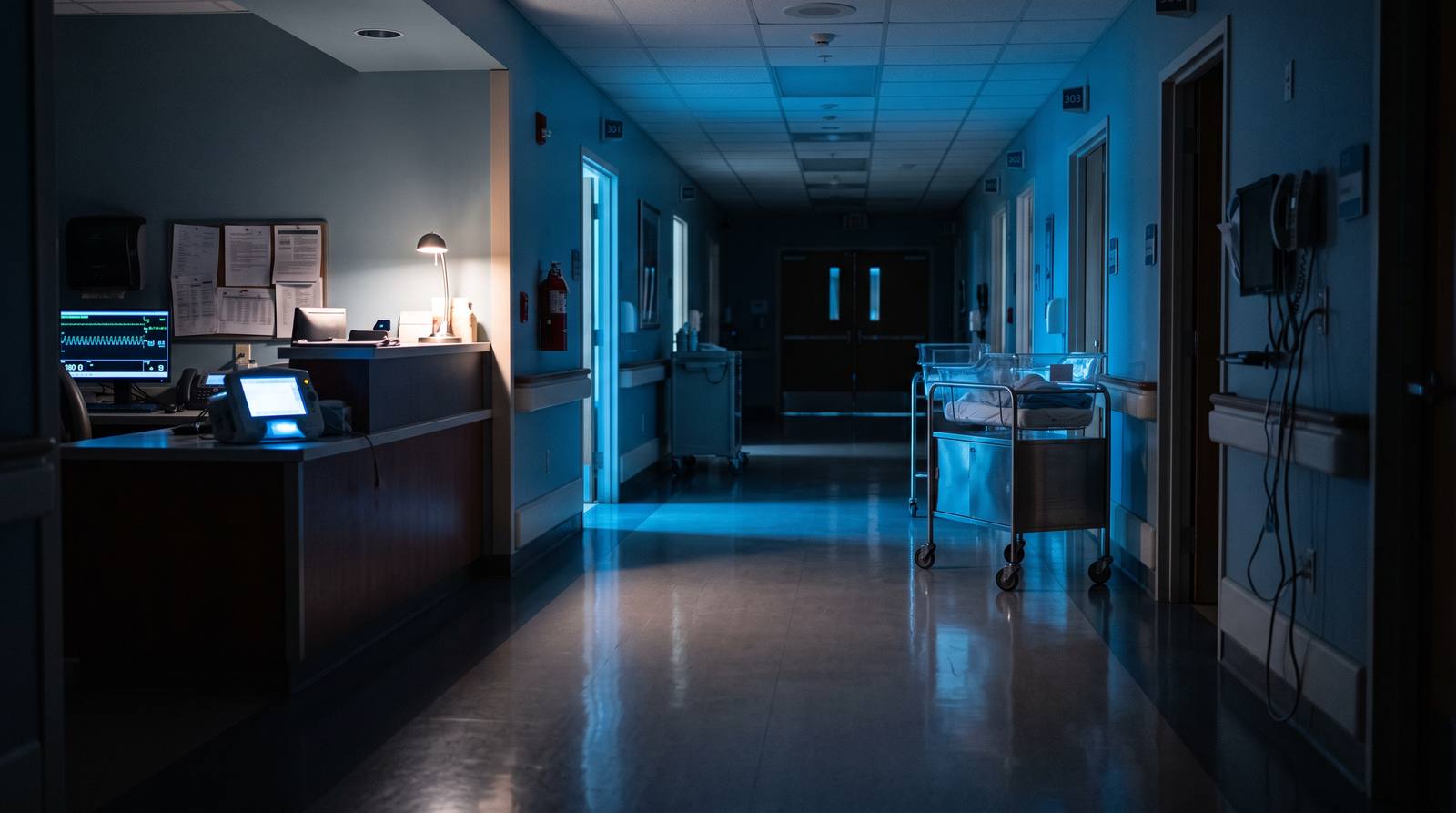

If your baby was born with a limp arm, a weak grip, or an arm that stays turned in against the body, the doctor may have said Erb’s palsy or brachial plexus birth injury. These injuries happen when the nerves that run from the neck into the arm are stretched or torn during birth. Many babies recover on their own; others face therapy, surgery and lifelong limits in one arm.
Not every brachial plexus injury is someone’s fault. Some happen because the delivery team pulled too hard on the baby’s head, mishandled a stuck shoulder, or ignored warning signs that called for a different plan. Parents rarely get a straight answer about which it was.
This page explains what Erb’s palsy is, how delivery mistakes cause it, and what a records review looks for. Beverly Law reviews birth injury cases across California for free, in English y Español, with no fee unless we win.
Was your baby hurt during delivery?
Tell us your name and phone. We call you back today, in English or Spanish, and the consultation is free.
Free consultation · English y Español · No fee unless we win
What is Erb’s palsy
The brachial plexus is a network of nerves near the neck that gives rise to all the nerves of the arm. Its roots, labeled C5 through T1, leave the spinal cord in the lower neck and carry the signals that let a child lift the shoulder, bend the elbow and close the hand.
Erb’s palsy is the most common brachial plexus birth injury. It affects the upper roots, C5 and C6, which control the shoulder and elbow, so the arm hangs straight and turned inward and cannot be raised. Klumpke’s palsy is a less common variant that injures the lower nerves and mainly affects the wrist and hand. A total (global) plexus injury damages the nerves from C5 to T1 and leaves the whole arm limp.
Doctors also grade the damage: a stretch (neurapraxia) is the mildest and most common; scar tissue can press on a healing nerve (neuroma); a nerve can be torn (rupture) or pulled from the spinal cord (avulsion). The last two do not heal on their own and usually need surgery.
Brachial plexus birth injuries occur in roughly one to three of every 1,000 births. Many babies improve within the first three to four months; when they do not, the injury is more likely to be permanent.
How mistakes during delivery cause it
The most common setting is shoulder dystocia: the baby’s head is delivered, but one shoulder gets stuck behind the mother’s pelvic bone and the body does not follow. It is an obstetric emergency, and what the team does next often decides whether the baby goes home with a healthy arm.
The nerves are injured when the baby’s head and neck are stretched away from the stuck shoulder. Pulling on the head, bending the neck to one side, or using force to speed a difficult delivery can stretch the nerves past their limit or tear them. The same can happen when tools such as forceps are used and the neck and shoulder are stretched.
The right response to shoulder dystocia is a set of trained maneuvers, not more pulling. The American College of Obstetricians and Gynecologists (ACOG) says a systematic approach and simulation training improve outcomes and documentation. A delivery note showing repeated traction, no maneuvers, or maneuvers in the wrong order becomes central to a negligence review.
Some risk factors are known before labor: a large baby (macrosomia), maternal diabetes, the mother’s weight, a previous shoulder dystocia, a breech position and a prolonged labor. ACOG notes they predict shoulder dystocia poorly in any single birth. But when several are present and documented, the standard of care may require discussing the risks, preparing for the emergency, or offering a cesarean, which lowers the risk even though it does not eliminate it.
Signs parents notice
These injuries are almost always noticed at birth or in the first days of life. Parents and nurses typically see:
If you notice these signs, ask for a pediatric neurology referral and start range-of-motion therapy as soon as the doctor allows, usually at about three weeks of age, so the joints do not stiffen while the nerves heal.
- One arm hangs limp or barely moves while the other moves normally
- No startle (Moro) reflex on the affected side
- The “waiter’s tip” position: arm straight and turned in, wrist bent, palm facing backward
- A weak or absent grip on that side
- Loss of feeling in the arm, or signs of pain when it is moved
- A drooping eyelid or smaller pupil on the same side (Horner’s syndrome)
- A broken collarbone or upper arm bone on X-ray, which often goes with a nerve injury
Is it medical negligence?
In California, a medical negligence claim asks one question: did the doctor, midwife or nurse act as a reasonably careful provider would have in the same situation? That level of care is the standard of care. Falling below it and causing harm is negligence.
Some brachial plexus injuries happen without anyone doing anything wrong. Shoulder dystocia is often unpredictable, the nerves can be stretched by the forces of labor itself, and even a cesarean does not remove the risk completely. A limp arm at birth does not, by itself, prove a mistake.
What separates a preventable injury from an unavoidable one is usually in the records. A review looks at whether the estimated fetal weight and maternal diabetes were tracked; whether there was a plan for a large baby; whether forceps or a vacuum extractor were used, and why; and, once the shoulder got stuck, which maneuvers were performed, in what order, and whether excessive force was applied to the head.
The type of injury matters too: an avulsion, a rupture, a total plexus injury, or a nerve injury with a fractured collarbone or arm bone suggests more force than a simple stretch. Beverly Law has obstetric and pediatric neurology experts compare the records against the standard of care before telling a family whether they have a case.
Deadline to file in California
California gives a child’s birth-injury case its own deadline. Under Code of Civil Procedure § 340.5, a minor must sue within three years of the wrongful act, but a child who was under six when it happened has until his or her eighth birthday if that is longer. For a baby hurt during labor or delivery, that usually means the eighth birthday. The clock runs from the act itself, not from the day the family learned what went wrong, and it is paused only in narrow cases of fraud or collusion. Parents’ own claims, and claims against a public hospital, can have much shorter deadlines, so it is safer to get advice early.
Many California babies are born at county or University of California hospitals: LAC+USC, Harbor-UCLA, Olive View-UCLA, Riverside University Health System, Arrowhead Regional, UC Irvine, UC San Diego, UC Davis and others. These are public entities, and the Government Claims Act applies. Under Government Code § 911.2, a written claim for injury or death must be presented to the public entity within six months of the injury, before any lawsuit. If the claim is rejected in writing, Government Code § 945.6 gives six months from that notice to file suit. The child’s longer deadline under Code of Civil Procedure § 340.5 does not replace this six-month claim, so families with a public-hospital birth should act right away.
What compensation covers
A child with a lasting brachial plexus injury may need care for decades. Compensation is meant to cover the full cost, past and future, so the burden does not fall only on the family.
Medical costs come first: surgery such as nerve grafts, nerve transfers and later tendon transfers; hospital stays; MRI and EMG testing; and follow-up with pediatric neurologists and orthopedic surgeons. Nerve surgery is usually done in the first year of life and tendon transfers between ages one and three.
Physical and occupational therapy can continue for years to keep the joints flexible, build strength and teach a child to use the arm. A claim can also cover braces, adaptive equipment, home modifications and the future care a life-care planner projects the child will need as an adult.
When an arm never regains full function, the child’s lost earning capacity over a working lifetime is part of the claim, along with pain and suffering: the physical pain, the limits on play and sports, and the weight of growing up with a visible disability.
California’s MICRA law limits one part of a medical malpractice recovery. Under Civil Code § 3333.2, as amended by AB 35, non-economic damages (pain, suffering, loss of enjoyment of life) are capped. In 2026 the cap is $470,000 for injury and $650,000 for wrongful death, and it rises every January 1 ($40,000 and $50,000 a year until 2033, then 2% a year). Separate caps can apply to doctors, hospitals and unaffiliated providers. Economic damages are not capped: lifetime medical care, therapy, equipment, home modifications and lost earning capacity can be recovered in full, and in a birth-injury case they are usually the largest part of the claim.
What to ask the hospital for
In California you have the right to a copy of your medical records and your child’s. Ask in writing and ask for the complete chart, not a summary. The most useful documents are:
Request them soon, since some records are kept for a limited time. If the hospital delays, an attorney can obtain them directly.
- Prenatal records, including every ultrasound and each estimated fetal weight
- Diabetes screening results and weight gain during the pregnancy
- The labor and delivery record, fetal heart-rate strips, and any use of oxytocin (Pitocin)
- Nursing notes from labor, delivery and the newborn nursery
- Documentation of shoulder dystocia: which maneuvers were used, in what order, and by whom
- Time stamps for delivery of the head and of the body
- Any use of forceps or a vacuum extractor, and the reason given
- The newborn exam and Apgar scores, including Moro reflex, grip and arm movement
- Pediatric neurology consults, EMG results, and imaging such as X-rays and MRI
How Beverly Law helps
Beverly Law is a Los Angeles personal injury firm that represents families across California. Birth injury cases turn on medical records, expert testimony and strict deadlines. Our team knows how to get the complete chart and put it in front of the right obstetric and pediatric experts.
When you call, someone who speaks your language will listen, explain your options and tell you honestly whether the facts support a claim. If we take your case, we handle the records, the experts, the insurance company and the court while you focus on your child.
The consultation is free, and there is no fee unless we win. Call 1 (877) 427-2752 any time, in English y Español.
Free birth-injury case review
We review the delivery records with medical experts and tell you honestly whether there is a case. You pay nothing unless we win.
Questions parents ask
Does Erb’s palsy go away?
Often, yes. Many babies with a stretch injury regain movement and feeling on their own within three to four months, and some keep improving more slowly for as long as two years. But nerves that were torn or pulled from the spinal cord do not heal by themselves. If there is no improvement over the first three to six months, doctors usually consider surgery, and some children are left with permanent weakness in the arm.
Was my baby’s Erb’s palsy preventable?
It depends on what the records show. Some brachial plexus injuries happen despite proper care. Others follow excessive pulling on the head during shoulder dystocia, skipped maneuvers, or a failure to plan for known risks such as a very large baby or maternal diabetes. A birth injury attorney can obtain the complete chart and have obstetric experts compare what was done with the accepted standard of care.
How long do I have to sue in California?
California gives a child’s birth-injury case its own deadline. Under Code of Civil Procedure § 340.5, a minor must sue within three years of the wrongful act, but a child who was under six when it happened has until his or her eighth birthday if that is longer. For a baby hurt during labor or delivery, that usually means the eighth birthday. The clock runs from the act itself, not from the day the family learned what went wrong, and it is paused only in narrow cases of fraud or collusion. Parents’ own claims, and claims against a public hospital, can have much shorter deadlines, so it is safer to get advice early.
What if the baby was born at a county hospital?
Many California babies are born at county or University of California hospitals: LAC+USC, Harbor-UCLA, Olive View-UCLA, Riverside University Health System, Arrowhead Regional, UC Irvine, UC San Diego, UC Davis and others. These are public entities, and the Government Claims Act applies. Under Government Code § 911.2, a written claim for injury or death must be presented to the public entity within six months of the injury, before any lawsuit. If the claim is rejected in writing, Government Code § 945.6 gives six months from that notice to file suit. The child’s longer deadline under Code of Civil Procedure § 340.5 does not replace this six-month claim, so families with a public-hospital birth should act right away.
Is there a cap on compensation?
California’s MICRA law limits one part of a medical malpractice recovery. Under Civil Code § 3333.2, as amended by AB 35, non-economic damages (pain, suffering, loss of enjoyment of life) are capped. In 2026 the cap is $470,000 for injury and $650,000 for wrongful death, and it rises every January 1 ($40,000 and $50,000 a year until 2033, then 2% a year). Separate caps can apply to doctors, hospitals and unaffiliated providers. Economic damages are not capped: lifetime medical care, therapy, equipment, home modifications and lost earning capacity can be recovered in full, and in a birth-injury case they are usually the largest part of the claim.
How much does a lawyer cost?
Nothing up front. Beverly Law handles birth injury cases on a contingency basis: the consultation is free, we advance the costs of obtaining records and hiring medical experts, and our fee is a percentage of the recovery we obtain for your family. If we do not win, you do not pay a fee. We explain the agreement in English or Spanish before you sign anything.
What is shoulder dystocia?
Shoulder dystocia is an emergency during a vaginal birth in which the baby’s head has been delivered but a shoulder is stuck behind the mother’s pelvic bone. The delivery team must free the shoulder quickly using specific maneuvers. Pulling or bending the baby’s head to force the body out can stretch or tear the brachial plexus nerves and cause Erb’s palsy. It cannot be reliably predicted, but risk factors include a large baby and maternal diabetes.
Ask a question
Not ready to call? Write your question and a member of our team answers you — no cost, no commitment.
Erb’s Palsy Lawyer in California — Beverly Law
Free case review for families in California. We obtain the delivery records, have them reviewed by medical experts and deal with the hospital and its insurer — you focus on your child. You pay nothing unless we win.
Related pages
Cerebral Palsy · HIE / Oxygen Deprivation at Birth · Statute of Limitations · MICRA Damages Cap · California birth injury lawyers
Cities we serve
Los Angeles · Orange County · San Diego · Riverside · San Bernardino
Sources
- AAOS OrthoInfo — Erb's Palsy (Brachial Plexus Birth Palsy)
- NINDS (NIH) — Brachial Plexus Injury
- Mayo Clinic — Brachial plexus injury: Symptoms and causes
- Mayo Clinic — Brachial plexus injury: Diagnosis and treatment
- MedlinePlus — Brachial plexus injury in newborns
- Cleveland Clinic — Erb's Palsy
- Cleveland Clinic — Brachial Plexus Injury
- ACOG Practice Bulletin No. 178 — Shoulder Dystocia
- Children's Hospital of Philadelphia — Brachial Plexus and Peripheral Nerve Injuries
- Boston Children's Hospital — Answers for parents whose baby is born with brachial plexus injury
- Johns Hopkins Medicine — Brachial Plexus Injuries
- Hospital for Special Surgery — Erb's Palsy (Brachial Plexus Birth Palsy)
- Nationwide Children's Hospital — Brachial Plexus Injury
- Nationwide Children's Hospital — Identifying and Treating Brachial Plexus Injuries in Infants (PDF)
- Seattle Children's — Brachial Plexus Palsy
- Nemours KidsHealth — Newborn Brachial Plexus Injuries
Important: This page is general information about birth injuries and California law, not legal advice, and reading it does not create an attorney-client relationship with Beverly Law. Every case is different — talk to a lawyer about your own situation. Attorney advertising. Prior results do not guarantee a similar outcome. No fee unless we win. Last reviewed: 2026-09-18.