
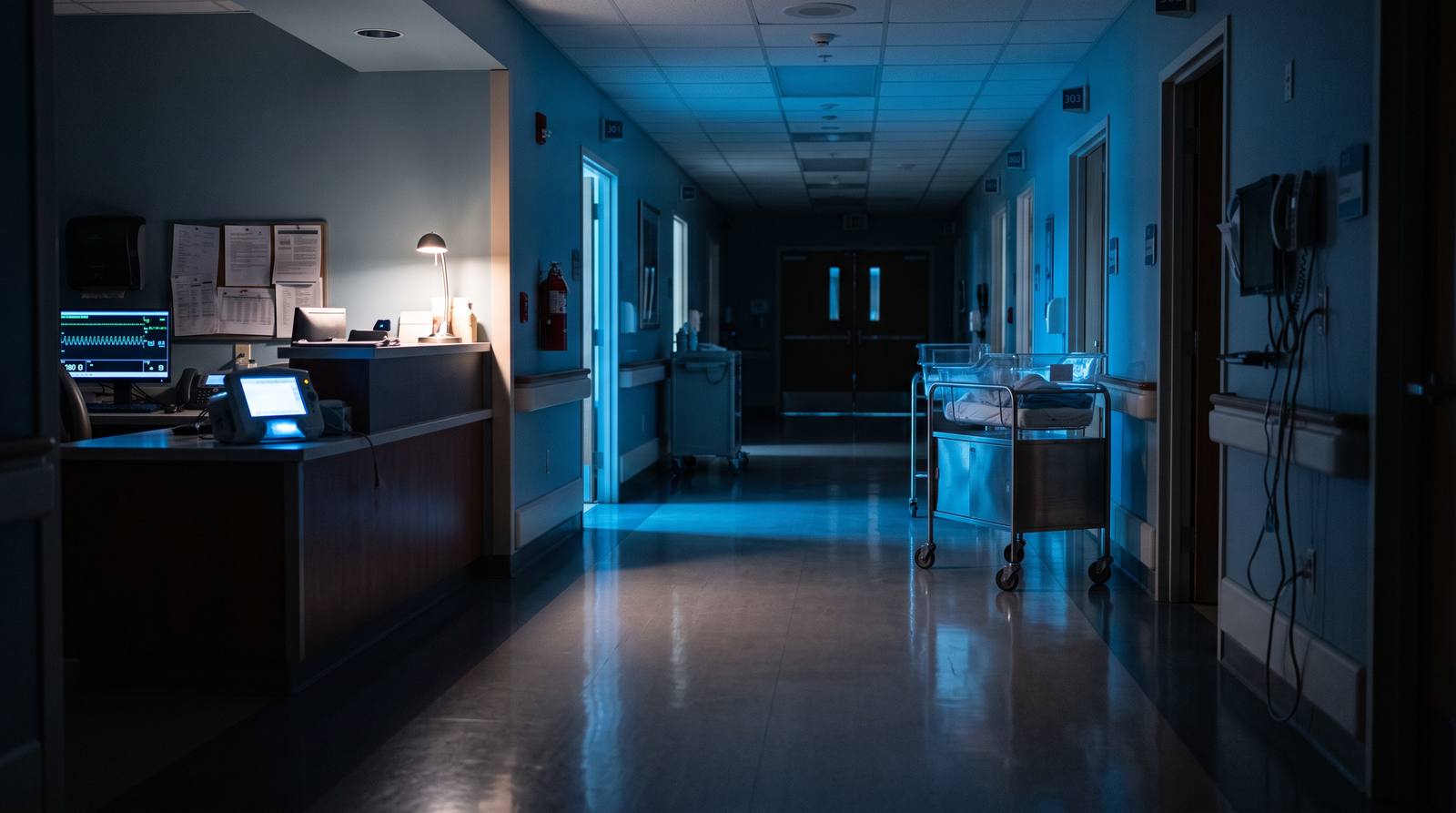

Pomona Valley Hospital Medical Center is a nonprofit hospital at 1798 North Garey Avenue in Pomona, in Los Angeles County. According to the hospital's own website, its Women's Center offers private birthing suites, and the hospital says more than 5,000 babies are born there each year. Many families in Pomona and the nearby San Gabriel Valley and Inland Empire communities have welcomed a child here.
Most births go as hoped. Some do not. A baby may need help breathing, may go to the intensive care nursery, or may later be diagnosed with a condition that parents did not expect. If your child was born at Pomona Valley Hospital Medical Center and you are asking what happened, this page is for you. It explains, in plain words, the injuries families ask about, the warning signs, who may be involved in a claim, and the steps you can take to understand your options.
This page is general information. It is not about any particular delivery, and it does not say that anyone at the hospital did anything wrong. A birth injury can happen even when everyone does their best, and only a careful review of the medical records by qualified experts can tell a family whether a claim is worth pursuing. Reading this page does not create an attorney-client relationship.
Was your baby hurt during delivery?
Tell us your name and phone. We call you back today, in English or Spanish, and the consultation is free.
Free consultation · English y Español · No fees or costs unless we win
At a glance: Pomona Valley Hospital Medical Center
| Address | 1798 North Garey Avenue, Pomona, CA 91767 |
| County | Los Angeles County |
| Health system / operator | Pomona Valley Hospital Medical Center (nonprofit corporation) |
| Type of hospital | Private nonprofit hospital |
| Newborns in 2024 | 4,531 (report to the state, HCAI) |
| Licensed NICU beds | 53 |
| NICU level | Level IIIB |
| Main phone | 909-986-9500 |
| Hospital website | pvhmc.org |
Sources: HCAI — 2024 Hospital Annual Utilization Report and the hospital’s own website.
Labor and Delivery at Pomona Valley Hospital Medical Center in Pomona, CA
Pomona Valley Hospital Medical Center is licensed as a nonprofit corporation, according to its 2024 report to the state (HCAI), and it serves Pomona and the surrounding region from its campus on North Garey Avenue. The hospital's Women's Center page describes private birthing suites, guided tours, prenatal classes, a Perinatal Center for high-risk pregnancies, and a Sweet Success program for women with gestational or pre-existing diabetes. The page also says patients can plan their birth preferences with the hospital's guidance and can include a doula on the birth team.
For pregnancies that need more support, the hospital describes a maternal transport team that can bring high-risk patients to the center, and a neonatal transport service that responds to requests for acutely ill infants around the clock. According to the hospital's 2024 report to the state (HCAI), the newborn nursery cared for 4,531 babies in 2024.
The hospital also has a neonatal intensive care unit (NICU). According to the same state report, it is licensed for 53 intensive-care newborn beds and had 723 NICU discharges in 2024. The hospital's NICU page describes its transport service as providing care from a level IIIB regional intensive care unit. A NICU stay is common for babies born early, babies with breathing problems, and babies who need close watching in the first hours. A NICU stay by itself does not mean that a birth injury happened.
Birth Injuries Families Ask About After a Difficult Delivery
Hypoxic-ischemic encephalopathy (HIE), sometimes called birth asphyxia or neonatal encephalopathy, is brain injury from too little oxygen or blood flow around the time of birth. The Cleveland Clinic lists poor feeding, irritability and a weak cry among the milder signs and seizures, abnormal breathing and loss of consciousness among the severe ones. Some newborns with HIE are treated with controlled cooling in the NICU, which doctors start within hours of birth.
Cerebral palsy (CP) is a group of disorders that affect movement, balance and posture. The Centers for Disease Control and Prevention (CDC) explains that CP results from abnormal development of, or damage to, the developing brain, that most cases begin before or during birth, and that the exact cause is often unknown. The CDC also notes that lack of oxygen during birth appears to account for only a small number of cases. A diagnosis of CP therefore does not, by itself, show that something went wrong during delivery. That question is exactly what a records review tries to answer.
Erb's palsy, also called brachial plexus birth injury, is weakness or loss of movement in an arm after the nerves of the shoulder are stretched during birth. The Hospital for Special Surgery explains that it is most often linked to shoulder dystocia, when the baby's shoulder is held behind the mother's pelvis, and that risk factors include a large baby and maternal diabetes. About two-thirds of children recover without surgery, but more severe injuries may need nerve surgery.
Other conditions families ask about include bleeding in or around a newborn's brain, a fractured collarbone or skull, and infections such as group B strep (GBS) that can make a newborn very sick within hours or days. Mothers can be hurt too, for example by heavy bleeding after delivery (postpartum hemorrhage) or by tears and surgical complications. Each of these has many possible causes, and many occur even when care is excellent. An independent review looks at the facts of one delivery, not at generalities.

Warning Signs of a Birth Injury in the First Days, Weeks and Months
In the first hours and days, signs that doctors take seriously include trouble breathing, a weak or unusual cry, poor feeding, unusual sleepiness or stiffness, floppiness, seizures or jerking movements, a very low or very high temperature, and a baby who does not move one arm. If you see any of these at home, call your pediatrician or seek emergency care right away. Do not wait to see if it passes.
In the weeks and months that follow, parents often notice that a baby is slow to reach milestones. The CDC lists signs of cerebral palsy in babies under six months that include head lag when lifted, stiffness or floppiness, an arching back and neck, and stiff, crossing legs. After six months, signs can include not rolling over, difficulty bringing both hands together or to the mouth, and reaching with only one hand. The CDC adds that some children without CP may show these signs too, so they are a reason to talk with a doctor, not a diagnosis.
Free birth-injury case review
We review the delivery records with medical experts and tell you honestly whether there is a case. You pay no fees or costs unless we win.
Who May Be Responsible in a Birth-Injury Claim
A delivery involves many people, and the question of who may be responsible depends on the facts. Those who may be involved include the obstetrician, a midwife, the labor and delivery nurses, an anesthesiologist, the pediatrician or neonatologist who cared for the baby, and the hospital itself. A claim can also involve a medical group that employs or contracts with the physicians.
One of the most common questions is whether the doctor worked for the hospital. Many obstetricians and anesthesiologists are independent physicians or part of a separate medical group. They have privileges to practice at a hospital, but they are not hospital employees. Nurses and other staff are often employed by the hospital. This difference matters because it affects who may be named in a claim and which insurance applies. Sorting it out is part of a careful review, and families do not need to figure it out before they call.
California law may treat a claim differently depending on who the defendants are. Private hospitals and public hospitals follow different rules, and the page adds verified legal information below. Parents also have their own claims, in addition to the child's. Deadlines can be strict, so it is wise to ask questions early, even if you are not sure that you want to take action.
How an Independent Expert Review of a Delivery Works
An independent review starts with the medical records. A qualified physician, usually an obstetrician, a maternal-fetal medicine specialist or a neonatologist, reads the prenatal chart, the labor and delivery notes, the fetal heart monitoring strips, the anesthesia record, the delivery summary and the newborn records. The reviewer looks at what was known at each point in time, what was done, and whether the care met accepted standards.
Several records tend to matter most. Fetal heart monitoring strips show the baby's heart rate and the mother's contractions during labor. Apgar scores rate how the baby looked and responded at one and five minutes after birth. Cord blood gas results measure acid levels in the baby's blood at delivery. NICU notes record what treatment the baby received and how the baby responded. Brain imaging such as an MRI, usually done days after birth, can show the pattern and timing of an injury.
The review answers two separate questions. First, did the care fall below accepted standards? Second, if it did, did that cause the child's injury? Many families learn that the answer to one or both is no, and that is useful to know. When the answer is yes, the same experts can help estimate the child's lifetime needs. Reviewing records does not commit a family to a lawsuit.
What to Do Now If You Think Your Baby Was Injured at Birth
Start with your child's health. Keep all pediatric, specialist and therapy appointments, and ask each doctor to explain the diagnosis in plain language. Ask what tests were done and what follow-up is planned.
Next, protect the information. Request your baby's complete records and your own labor and delivery records from the hospital, and ask specifically for the fetal heart monitoring strips and the NICU chart. Keep your own notes with dates, names of people as you remember them, and what you were told. Save discharge papers, bills, photos and videos. Avoid posting details on social media.
Then ask for advice early. Speak with a birth-injury attorney who can arrange an independent review at no cost to you to talk it over. Ask about deadlines at the first conversation: California has strict time limits, a required written notice before a medical malpractice suit, and a very short claim period if a public hospital is involved. If the baby was born to Kaiser members, a separate arbitration process applies. Asking questions does not mean you have to file anything, and the choice always stays with your family.
Support for Your Child While a Birth-Injury Case Is Reviewed
Your child's care should not wait for a legal answer. Physical, occupational and speech therapy can start as soon as a doctor recommends it, and many families also work with a developmental pediatrician or a pediatric neurologist. If your child received care in the NICU, ask the hospital's social worker or your pediatrician about follow-up clinics for babies who were in intensive care.
In California, children under three with delays or a risk of delay can receive Early Start services through their regional center. Children with certain serious conditions may qualify for California Children's Services (CCS), and children in low-income families may have Medi-Cal. Eligibility rules differ, so ask the regional center or the county for current information. Nothing here is a promise of coverage or services.
Deadlines for a birth-injury case in California
California gives a child’s birth-injury case its own deadline. Under Code of Civil Procedure § 340.5, a minor must sue within three years of the wrongful act, but a child who was under six when it happened has until his or her eighth birthday if that is longer. For a baby hurt during labor or delivery, that usually means the eighth birthday. The clock runs from the act itself, not from the day the family learned what went wrong, and it is paused only in narrow cases of fraud or collusion. Parents’ own claims, and claims against a public hospital, can have much shorter deadlines, so it is safer to get advice early.
Before a medical malpractice lawsuit can be filed in California, the doctor or hospital must get written warning. Under Code of Civil Procedure § 364, the health care provider must receive at least 90 days’ notice of the intention to sue. No special form is required, but the notice must state the legal basis of the claim, the type of loss and the specific injuries suffered. Under § 364(d), if the notice is served within the last 90 days of the filing deadline, the deadline is extended 90 days from the date of service. The notice is a required step, and it is often the moment a case moves from questions to formal action.
What MICRA caps — and what it does not
California’s MICRA law limits one part of a medical malpractice recovery. Under Civil Code § 3333.2, as amended by AB 35, non-economic damages (pain, suffering, loss of enjoyment of life) are capped. In 2026 the cap is $470,000 for injury and $650,000 for wrongful death, and it rises every January 1 ($40,000 and $50,000 a year until 2033, then 2% a year). Separate caps can apply to doctors, hospitals and unaffiliated providers. Economic damages are not capped: lifetime medical care, therapy, equipment, home modifications and lost earning capacity can be recovered in full, and in a birth-injury case they are usually the largest part of the claim.
How to get the delivery records from Pomona Valley Hospital Medical Center
California law gives families a right to these records. Under Health and Safety Code § 123110, a patient or the patient’s personal representative — for a baby, a parent or guardian (§ 123105) — may inspect the records within five working days of a written request and is entitled to a paper or electronic copy, which the provider must send within 15 days after receiving a request that says which records are wanted. For a birth-injury review, ask for both charts: the mother’s labor and delivery record, including the fetal heart rate monitoring strips, and the baby’s newborn and NICU record.
To get your baby's records and your own labor and delivery records from Pomona Valley Hospital Medical Center, contact the hospital's Health Information Management (HIM) department, Release of Information (ROI). The hospital's website says you can send a signed Release of Health Information authorization form (available in English and Spanish) with a copy of your photo ID by mail to HIM – ROI, 1798 N. Garey Ave, Pomona, CA 91767, by fax to 909-469-2141, or by email to group.him.roi@pvhmc.org. The page says electronic signatures are not currently accepted and that unsigned or incomplete requests are returned. Walk-in hours are Monday through Friday, 8:00 am to 4:30 pm, and records are also available through the hospital's MYHealth patient portal. Ask specifically for the fetal heart monitoring strips, the labor and delivery chart, the newborn nursery and NICU records, and the cord blood gas results. Confirm the current process with the hospital before you send your request.
The hospital’s medical records page →
Where a case from Pomona would be filed
A birth-injury case from a delivery in Pomona would usually be filed in the Superior Court of California, County of Los Angeles, in its civil unlimited division. The court's website lists personal injury hub departments at the Spring Street Courthouse, 312 North Spring Street, Los Angeles, CA 90012. The court's assignment of civil cases can change, and the court's site notes that its personal injury hub is being phased out, so an attorney will confirm the correct courthouse and department when a case is filed.
Spring Street Courthouse, Superior Court of California, County of Los Angeles → — 312 North Spring Street, Los Angeles, CA 90012
Help for your child now: Early Start in Los Angeles County
Babies and toddlers under age 3 who have delays or are at risk for them can receive Early Start (early intervention) services in California. For families in Pomona, the regional center is the San Gabriel/Pomona Regional Center, whose main office is at 75 Rancho Camino Drive, Pomona, CA 91766. Its Early Start intake line is (909) 620-7722, and its website is sgprc.org. You can ask for an evaluation yourself, and you do not need a diagnosis or a doctor's referral to call. Tell the staff what worries you, and bring any medical reports you have. Early Start is a separate program and does not depend on any legal claim.
San Gabriel/Pomona Regional Center →
Key facts
- Pomona Valley Hospital Medical Center, at 1798 North Garey Avenue in Pomona, is a nonprofit hospital, and its own website says more than 5,000 babies are born there each year.
- According to the hospital's 2024 report to the state (HCAI), its newborn nursery cared for 4,531 babies and its NICU has 53 licensed beds, with 723 NICU discharges that year.
- A NICU stay or a diagnosis such as cerebral palsy does not by itself mean that a birth injury was caused by the care; only a review of the records can answer that.
- You have the right to ask for your baby's records, including the fetal heart monitoring strips, and the hospital's Health Information Management office handles those requests.
- California sets strict deadlines for birth-injury claims, so it is safer to ask for advice early, and Early Start services for children under 3 are available without waiting for a legal answer.
Questions parents ask
Can I file a birth-injury claim against Pomona Valley Hospital Medical Center?
Whether a claim is possible depends on what the medical records show, not on the hospital's name. A birth-injury claim requires proof that the care fell below accepted standards and that this caused the injury. An independent expert review of the records is how families find out. Many families begin with a review and then decide what, if anything, to do.
How long do I have to file a birth-injury claim?
California gives a child's birth-injury case its own deadline, which is longer than the usual deadline for adults, but it is not unlimited and it runs from the delivery itself. Parents' own claims, and claims against public hospitals, can have much shorter deadlines. The verified legal details are below on this page, and the safest step is to ask for advice as early as possible.
Is Pomona Valley Hospital Medical Center a public hospital?
According to the hospital's 2024 report to the state (HCAI), it is operated as a nonprofit corporation, and we classify it as a private nonprofit hospital. Public hospitals, such as county and University of California hospitals, follow a special six-month claim rule. If you are not sure who operated the place where your child was born or where a doctor practiced, ask for a review so that the right rules are checked.
What if my doctor did not work for the hospital?
That is common. Many obstetricians, anesthesiologists and other physicians are independent or belong to a separate medical group, while nurses and other staff are often hospital employees. A claim may involve one or several of these parties. A records review can sort out who was involved, and you do not need to know the answer before you call.
How do I get my fetal monitoring strips from Pomona Valley Hospital Medical Center?
Send a signed Release of Health Information form and a copy of your photo ID to the hospital's Health Information Management, Release of Information office at 1798 N. Garey Ave, Pomona, CA 91767, by fax at 909-469-2141 or by email at group.him.roi@pvhmc.org. Electronic signatures are not currently accepted. Ask in writing for the fetal heart monitoring strips, the labor and delivery chart and the NICU records.
Does it cost anything to talk to a lawyer?
A first conversation about a birth-injury case is free at Beverly Law, and there is no obligation. Birth-injury cases are generally handled on a contingency basis, which means no attorney fee unless there is a recovery. Ask any lawyer to explain costs and fees in writing before you agree to anything.
Ask a question
Not ready to call? Write your question and a member of our team answers you — no cost, no commitment.
Other Los Angeles County hospitals we cover
Cedars-Sinai Medical Center · Miller Children’s & Women’s Long Beach · Los Angeles birth injury lawyers →
Pomona Valley Hospital Medical Center Birth Injury Lawyers — Beverly Law
Free case review for families in Pomona. We obtain the delivery records, have them reviewed by medical experts and deal with the hospital and its insurer — you focus on your child. You pay no fees or costs unless we win.
Related pages
Cerebral Palsy · Erb’s Palsy / Brachial Plexus Injury · HIE / Oxygen Deprivation at Birth · Statute of Limitations · MICRA Damages Cap · All California hospitals · California birth injury lawyers · Birth injury guides
Sources
- HCAI — 2024 Hospital Annual Utilization Report (final, October 2025)
- Pomona Valley Hospital Medical Center – Preparing for Baby (Women's Center) — Private birthing suites, more than 5,000 births a year, Perinatal Center, Sweet Success, doula option and maternal transport
- Pomona Valley Hospital Medical Center – Neonatal Intensive Care Unit — NICU transport service and the level IIIB regional intensive care unit description
- Pomona Valley Hospital Medical Center – Obtaining Your Medical Records — Health Information Management Release of Information address, fax, email, form, ID and walk-in hours
- California Department of Health Care Access and Information (HCAI) – Hospital Annual Utilization Report 2024 — Newborn nursery count, licensed NICU beds, NICU discharges and nonprofit type of control
- CDC – About Cerebral Palsy — Definition, causes, early signs and early intervention for cerebral palsy
- Hospital for Special Surgery – Erb's Palsy and Brachial Plexus Birth Injuries — Causes, symptoms and recovery of brachial plexus birth injury
- Cleveland Clinic – Hypoxic-Ischemic Encephalopathy (HIE) — What HIE is and its mild and severe signs in newborns
- Superior Court of California, County of Los Angeles – Spring Street Courthouse — Courthouse location for civil personal injury hub departments
- California Department of Developmental Services – Regional Center Early Start Intake — Regional center serving Pomona and Early Start intake information
- San Gabriel/Pomona Regional Center — Main office address in Pomona, phone and Early Start intake
- Code of Civil Procedure § 340.5
- Code of Civil Procedure § 364
- Civil Code § 3333.2 (as amended by AB 35, 2022)
- Health and Safety Code § 123110 (patient access to records)
Beverly Law is an independent law firm. We are not affiliated with, endorsed by or speaking for Pomona Valley Hospital Medical Center or Pomona Valley Hospital Medical Center (nonprofit corporation). Hospital facts on this page come from the public sources listed above.
Important: This page is general information about birth injuries and California law, not legal advice, and reading it does not create an attorney-client relationship with Beverly Law. Every case is different — talk to a lawyer about your own situation. Attorney advertising. Prior results do not guarantee a similar outcome. No fees or costs unless we win. Last reviewed: 2026-09-18.