
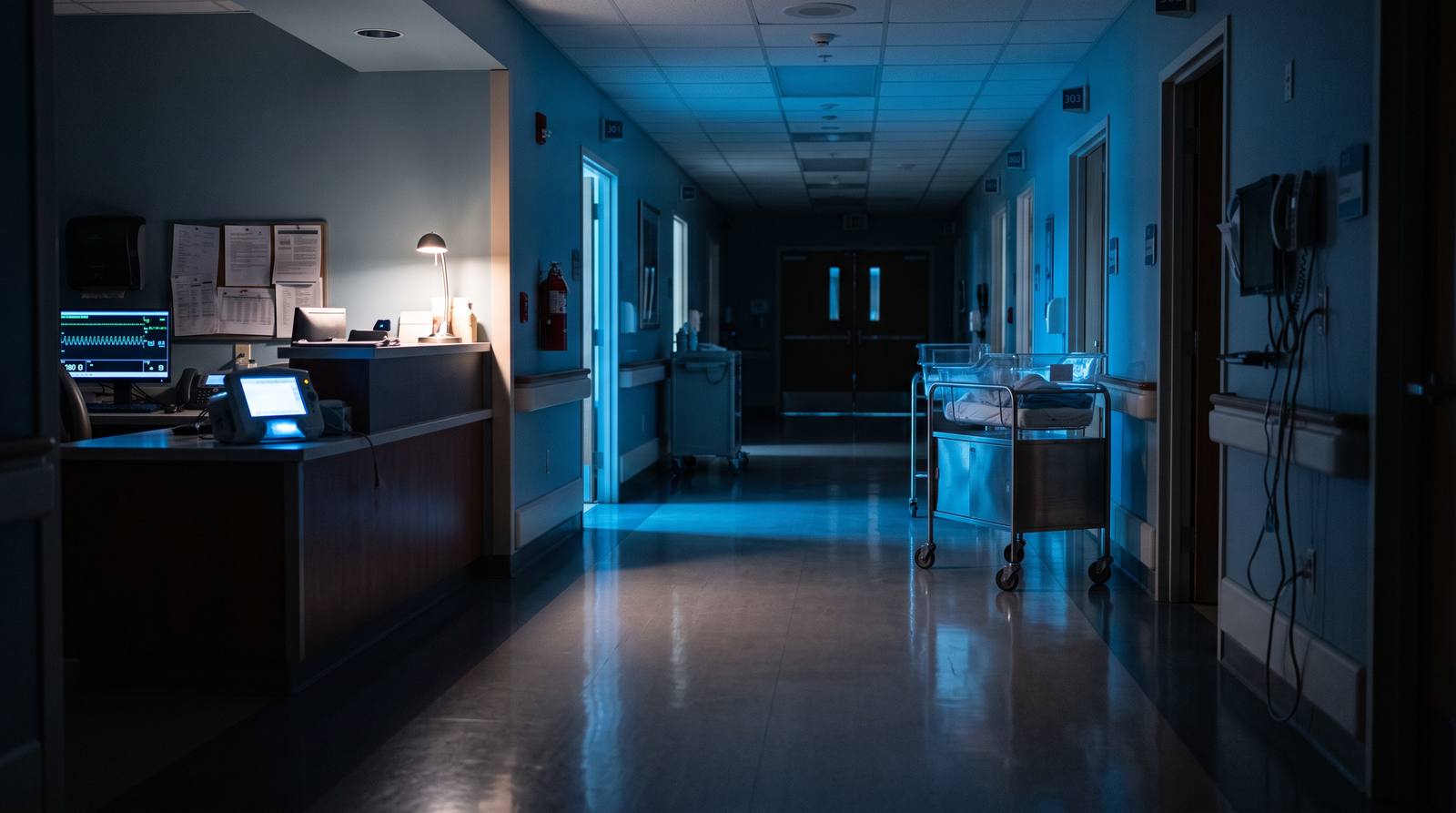

This page is for families who had a baby at Loma Linda University Medical Center-Murrieta, at 28062 Baxter Road in Murrieta, Riverside County, California, and who now have questions. Maybe your baby was moved to the NICU, was diagnosed with a condition that affects movement or learning, or needed extra care after a hard delivery. Maybe you were hurt yourself, with heavy bleeding or an infection. Whatever brought you here, you deserve plain answers, and this page is written to give them.
The hospital is part of Loma Linda University Health, a nonprofit organization. According to the hospital's 2024 report to the state (HCAI), its newborn nursery cared for 1,146 babies that year, and its intensive-care nursery has 6 licensed beds and had 141 discharges. Those numbers describe a busy community hospital where families come to give birth. Nothing on this page says or suggests that anything went wrong at this hospital. Most births go well, and our goal is only to help you understand your options if your family has questions.
Below you will find general medical information about birth injuries, warning signs, who can be involved in a birth-injury claim, how an independent expert review works, and the steps you can take now. We also explain how to request your records from the hospital, where a Riverside County case would usually be filed, and how to ask for early-intervention services for a child under three. This is general information, not legal advice, and reading it does not make you a client. Many firms offer a free first conversation and handle birth-injury cases on a contingency basis, but always ask any firm how it charges before you sign anything.
Was your baby hurt during delivery?
Tell us your name and phone. We call you back today, in English or Spanish, and the consultation is free.
Free consultation · English y Español · No fees or costs unless we win
At a glance: Loma Linda University Medical Center-Murrieta
| Address | 28062 Baxter Road, Murrieta, CA 92563 |
| County | Riverside County |
| Health system / operator | Loma Linda University Health |
| Type of hospital | Private nonprofit hospital |
| Newborns in 2024 | 1,146 (report to the state, HCAI) |
| Licensed NICU beds | 6 |
| NICU level | Level II |
| Main phone | (909) 558-4000 |
| Hospital website | murrieta.lluh.org |
Sources: HCAI — 2024 Hospital Annual Utilization Report and the hospital’s own website.
Labor and delivery at Loma Linda University Medical Center-Murrieta
According to the hospital's own Mother and Baby page, the Family Birthing Center at Loma Linda University Medical Center-Murrieta offers labor and delivery in five private suites, with twelve postpartum rooms. The hospital states that board-certified obstetricians are in the hospital 24 hours a day, and that it has an OB Emergency Department for pregnant patients that is open around the clock. The page we reviewed did not contain any notice of a closure or suspension of these services.
The hospital's neonatal intensive care unit is described on its website as a Level II NICU with six private rooms where parents can stay overnight with their baby. The hospital says its neonatal physicians are board certified and are also on staff at the Level IV NICU at Loma Linda University Children's Hospital, which gives babies who need more specialized care a path to that hospital. The hospital's 2024 report to the state (HCAI) matches the bed count: 6 licensed intensive-care newborn beds, 141 NICU discharges, and 1,146 newborns cared for in the nursery.
The hospital serves Murrieta and the surrounding Riverside County communities in the Temecula Valley area. Many families here are bilingual, and many are first-time parents who rely on the hospital's staff for guidance in the most important days of their lives. If your delivery was straightforward, we are glad. If your baby or you had a hard time, the sections below explain what the common problems are and what you can do next.
Birth injuries families ask about after a difficult delivery
Hypoxic-ischemic encephalopathy, or HIE, is brain injury from a lack of oxygen and blood flow around the time of birth. The Cleveland Clinic lists signs such as weak or very stiff muscle tone, trouble feeding, irritability, a weak cry, bluish skin and abnormal breathing. Some term and near-term babies with moderate or severe HIE are treated with therapeutic cooling, which is started in the first hours of life. Cooling can improve survival, but it does not remove every long-term risk, so many children need follow-up for years.
Cerebral palsy is a group of conditions that affect movement, balance and posture. The CDC explains that it is the most common motor disability in childhood, that it does not get worse over time, and that it results from abnormal development of, or damage to, the developing brain. The CDC also says that a lack of oxygen at birth is now thought to cause only a small number of cases, and that most cases are congenital with a cause that is often unknown. This matters: a diagnosis alone does not tell you why it happened, and only a careful review of the records can answer that for your child.
Erb's palsy and other brachial plexus injuries happen when the nerves that run from the neck to the arm are stretched during delivery, most often when a baby's shoulder is caught after the head is born (shoulder dystocia). The Cleveland Clinic and NINDS explain that many mild cases improve with time and therapy, while more severe nerve injuries can leave lasting weakness and sometimes need surgery. Other injuries families ask about include bleeding inside the skull or brain, skull fractures, and a broken collarbone. Many of these heal well, but some need close follow-up.
Newborn infections, such as those caused by group B strep (GBS), can become serious quickly, and mothers can also face complications such as heavy bleeding after delivery (postpartum hemorrhage), infection or injury to the birth canal. All of these are general medical topics. Whether any of them could have been prevented in a particular birth is a question for a qualified expert who has read the actual chart, not for a web page.

Warning signs of a birth injury in the first days, weeks and months
In the first days, parents and nurses watch for trouble breathing, a baby who is very floppy or very stiff, seizures or odd repeated movements, a weak or unusual cry, poor feeding or trouble sucking and swallowing, low blood sugar, a high or low temperature, and skin that looks blue or very yellow. An arm that does not move on one side, or a baby who cries when one shoulder is touched, can point to a nerve or bone injury. If you notice any of these, tell the nursing staff right away.
In the first weeks and months, watch for a baby who does not follow faces or lights, startles very little, feeds poorly, has trouble gaining weight, or seems unusually stiff or limp. The CDC lists signs of cerebral palsy such as head lag and stiffness or floppiness before six months, difficulty bringing hands together or to the mouth after six months, and crawling in a lopsided way or scooting after about ten months. A child can show some of these signs without having cerebral palsy, so a check by the pediatrician is the right next step.
Many injuries do not show up fully until a baby misses developmental milestones such as rolling, sitting, babbling or walking. If something feels off, trust your instinct. The CDC notes that you can contact your state's early-intervention program without waiting for a doctor's referral or diagnosis. Writing down dates, symptoms and what each provider told you helps both your child's doctors and, later, anyone reviewing the case.
Free birth-injury case review
We review the delivery records with medical experts and tell you honestly whether there is a case. You pay no fees or costs unless we win.
Who may be responsible in a birth-injury claim
A birth-injury claim is not always about a single person. Many people take part in a delivery, and the people who may be involved in a claim can include the nurses and other staff who monitor labor, the obstetrician, a midwife, an anesthesiologist, a neonatologist or pediatrician, and the hospital or medical group that employs or contracts with them. Whether any of them bears responsibility depends entirely on the facts and on what an expert finds in the records.
One question comes up often: did your doctor work for the hospital? Some physicians are employees of a hospital or health system. Others are independent doctors or belong to a separate medical group, and they bill separately and carry their own insurance. This affects who would be named in a claim, so it is worth finding out who delivered your baby and who employed them. Your records and your bills usually show this, and a lawyer can help you sort it out.
The hospital here is a private nonprofit hospital, not a county or University of California hospital, which affects which procedural rules apply. Strict deadlines apply to every birth-injury claim, including special rules that are shorter for public hospitals and different rules for members of health plans with arbitration agreements, so it is safer to speak to someone early. The verified legal paragraphs on this page explain the deadlines, the notice requirement and the damages rules.
How an independent expert review of the delivery works
Before any decision is made, the first step is to collect the complete medical chart for both mother and baby. A review usually looks at the fetal heart monitoring strips from labor, the Apgar scores at one and five minutes, umbilical cord blood gases that show the baby's oxygen and acid levels at birth, the labor and delivery nursing notes, the physician orders and progress notes, the anesthesia record, and the NICU notes, including any cooling treatment, seizures and the brain MRI or ultrasound.
Qualified experts, such as obstetricians, maternal-fetal medicine specialists, neonatologists, pediatric neurologists and nurses, read those records and put the events in order. They ask what was known at each point in labor, what the standard approach would have been, and whether the baby's condition is connected to the events of the delivery or has another cause, such as genetics or an infection that began before labor. Sometimes the answer is that nothing could have been done differently. That answer is also valuable to a family.
A review is not a lawsuit and does not mean anyone is blaming anyone. It is a way to turn a stack of papers into an understandable timeline. The review also helps estimate what a child may need over a lifetime, such as therapy, equipment, medical care and home changes, which is important in planning for your child's future whatever you decide.
What to do now: step-by-step for a family after a birth injury
First, keep your child's health at the center. Follow up with the pediatrician and any specialist, and keep every appointment. Write down dates, symptoms, medicines and names of the providers you see. Save discharge papers, photos, bills, insurance letters and anything the hospital gave you. Do not post details about your child's condition or the delivery on social media, and be careful about signing releases from insurers or other parties without asking questions.
Second, request the records. Ask for both the mother's chart and the baby's chart, and ask for the fetal monitoring strips, which are sometimes kept separately from the main chart, plus the NICU records and any imaging. Third, speak with an attorney who handles birth-injury cases early, even if you are not sure you want to take any action. Deadlines are strict, and they can be much shorter than families expect, especially for the parents' own claims. Asking questions does not commit you to anything.
Fourth, if your child is under three and has delays or a diagnosis, ask for an Early Start evaluation through your regional center right away, as described below. Fifth, take care of yourself. Birth trauma can be hard on mothers, fathers and siblings, and your own doctor, a counselor or a support group can help. A medical review, therapy for your child and care for your family can all move forward at the same time.
Support while your child's case is reviewed: therapy, regional center, Medi-Cal and CCS
Your child does not have to wait for a legal review to get help. Physical, occupational and speech therapy often start in infancy and can make a real difference. Pediatric specialists such as neurologists, orthopedists and developmental pediatricians can guide a care plan. Ask your pediatrician for referrals, and ask what your insurance covers.
For children under three, California's Early Start program, run through regional centers, offers evaluations and services for infants with delays or a risk of delay. For older children, the school district may provide services as part of an individualized education program. Families with limited income may qualify for Medi-Cal, and children with certain serious conditions can be referred to California Children's Services (CCS). Eligibility rules change, so check with the county or the program directly.
None of these services depends on whether a claim is ever filed, and nobody can promise any particular outcome from a review. What we can say is that early help is almost always better than waiting, and that keeping good records of your child's care helps in every direction.
Deadlines for a birth-injury case in California
California gives a child’s birth-injury case its own deadline. Under Code of Civil Procedure § 340.5, a minor must sue within three years of the wrongful act, but a child who was under six when it happened has until his or her eighth birthday if that is longer. For a baby hurt during labor or delivery, that usually means the eighth birthday. The clock runs from the act itself, not from the day the family learned what went wrong, and it is paused only in narrow cases of fraud or collusion. Parents’ own claims, and claims against a public hospital, can have much shorter deadlines, so it is safer to get advice early.
Before a medical malpractice lawsuit can be filed in California, the doctor or hospital must get written warning. Under Code of Civil Procedure § 364, the health care provider must receive at least 90 days’ notice of the intention to sue. No special form is required, but the notice must state the legal basis of the claim, the type of loss and the specific injuries suffered. Under § 364(d), if the notice is served within the last 90 days of the filing deadline, the deadline is extended 90 days from the date of service. The notice is a required step, and it is often the moment a case moves from questions to formal action.
What MICRA caps — and what it does not
California’s MICRA law limits one part of a medical malpractice recovery. Under Civil Code § 3333.2, as amended by AB 35, non-economic damages (pain, suffering, loss of enjoyment of life) are capped. In 2026 the cap is $470,000 for injury and $650,000 for wrongful death, and it rises every January 1 ($40,000 and $50,000 a year until 2033, then 2% a year). Separate caps can apply to doctors, hospitals and unaffiliated providers. Economic damages are not capped: lifetime medical care, therapy, equipment, home modifications and lost earning capacity can be recovered in full, and in a birth-injury case they are usually the largest part of the claim.
How to get the delivery records from Loma Linda University Medical Center
California law gives families a right to these records. Under Health and Safety Code § 123110, a patient or the patient’s personal representative — for a baby, a parent or guardian (§ 123105) — may inspect the records within five working days of a written request and is entitled to a paper or electronic copy, which the provider must send within 15 days after receiving a request that says which records are wanted. For a birth-injury review, ask for both charts: the mother’s labor and delivery record, including the fetal heart rate monitoring strips, and the baby’s newborn and NICU record.
To request records from Loma Linda University Medical Center-Murrieta, contact the Health Information Management (Medical Records) office of Loma Linda University Health. The hospital's records page says you can send a request through the MyChart patient portal, or complete its disclosure authorization form, pay any fee that applies, and send it to the Medical Records Department, which says it mails records within 15 days to the address on the form. The Murrieta Medical Records Office phone number listed on that page is 951-290-4510, Monday to Thursday, 8 a.m. to 12 p.m. and 1 p.m. to 4 p.m., and Friday, 8 a.m. to 11 a.m. and 12 p.m. to 3 p.m. Parents or legal guardians can request records for a young child, and the page notes that special rules apply to teenagers. Ask for the mother's chart and the baby's chart, and specifically ask for the fetal heart monitoring strips and NICU records.
The hospital’s medical records page →
Where a case from Murrieta would be filed
According to an announcement by the Superior Court of California, County of Riverside, unlimited civil cases that come from Murrieta have been filed at the Riverside Historic Courthouse, 4050 Main Street, Riverside, CA 92501, since August 1, 2026. Before that date, some Murrieta-area cases were filed at the Southwest Justice Center in Murrieta, so filing locations can change. A lawyer will confirm the right courthouse with the court before any case is filed, and many steps, including the required written notice to the health care provider, come first.
Riverside Historic Courthouse, Superior Court of California, County of Riverside → — 4050 Main Street, Riverside, CA 92501
Help for your child now: Early Start in Riverside County
Babies and toddlers under three who have a delay or a risk of delay can get Early Start services. In Riverside County, Early Start is provided through Inland Regional Center, a California regional center. A parent or guardian can ask for an evaluation; the center recommends its online referral form and also lists a Riverside County Early Start intake line at (909) 890-4763, where Spanish speakers can call the same number. The center says to expect a call within about two weeks and that the assessment and an Individualized Family Service Plan are due within 45 days of the referral. You do not need a lawyer or a court case, and the CDC notes that you do not need to wait for a doctor's referral.
Key facts
- According to the hospital's 2024 report to the state (HCAI), Loma Linda University Medical Center-Murrieta cared for 1,146 newborns in its nursery and had 141 NICU discharges.
- The hospital's website says its Family Birthing Center offers labor and delivery and that its Level II NICU has six private rooms where parents can stay overnight.
- The hospital is part of Loma Linda University Health, a nonprofit organization, and is a private hospital rather than a county or University of California hospital.
- A birth-injury claim in California has strict deadlines, and a family is safer asking about them early rather than waiting.
- You can ask the hospital's Medical Records office for the mother's and the baby's charts, including fetal monitoring strips, and ask for Early Start services for a child under three without a lawyer.
Questions parents ask
Can I file a birth-injury claim involving Loma Linda University Medical Center-Murrieta?
A family who delivered at any California hospital may ask a lawyer to review whether a claim is possible. Whether there is one depends on the medical records and on an expert's opinion, not on the hospital's name. Because the deadlines are strict, it is better to have the delivery reviewed sooner rather than later.
How long do I have to act after a birth injury?
California gives a child's birth-injury case its own deadline, and for a baby hurt during labor or delivery it usually runs to the child's eighth birthday. Parents' own claims can have much shorter deadlines, and claims against public hospitals have a short written-claim period. Do not wait to find out which rules apply to you.
Is Loma Linda University Medical Center-Murrieta a public hospital?
No. The state's report lists it as a non-profit corporation, under Loma Linda University Health, so it is not a county or University of California hospital. The short six-month claim that applies to public hospitals is therefore generally not the rule here, but a lawyer should confirm how it applies to your situation.
What if my doctor did not work for the hospital?
Many obstetricians and other physicians are independent or belong to separate medical groups, and nurses and hospital staff are often employed by the hospital. Which one is responsible, if any, depends on the facts. Your records and bills usually show who delivered your baby and who employed them.
How do I get my fetal monitoring strips from Loma Linda University Medical Center-Murrieta?
Send a written request to the hospital's Health Information Management (Medical Records) office, through MyChart or by the disclosure authorization form on the hospital's records page. Ask specifically for the fetal heart monitoring strips, the baby's NICU records and the mother's labor chart. California law gives parents a right to these records, and the hospital's page says it mails records within 15 days.
Does it cost anything to talk to a lawyer about a birth injury?
Many firms offer a free first conversation, and many handle birth-injury cases on a contingency basis, which means fees are paid only from a recovery. Ask any firm to explain how it charges, in writing, before you sign. Talking to a lawyer does not require you to file anything.
Ask a question
Not ready to call? Write your question and a member of our team answers you — no cost, no commitment.
Other Riverside County hospitals we cover
Rancho Springs Hospital, Murrieta · Riverside Community Hospital · Kaiser Permanente Riverside · RUHS Medical Center · JFK Memorial Hospital · Desert Regional Medical Center · Kaiser Permanente Moreno Valley MC · Riverside birth injury lawyers →
Loma Linda University Medical Center-Murrieta Birth Injury Lawyers — Beverly Law
Free case review for families in Murrieta. We obtain the delivery records, have them reviewed by medical experts and deal with the hospital and its insurer — you focus on your child. You pay no fees or costs unless we win.
Related pages
Cerebral Palsy · Erb’s Palsy / Brachial Plexus Injury · HIE / Oxygen Deprivation at Birth · Statute of Limitations · MICRA Damages Cap · All California hospitals · California birth injury lawyers · Birth injury guides
Sources
- HCAI — 2024 Hospital Annual Utilization Report (final, October 2025)
- Loma Linda University Medical Center-Murrieta: Mother & Baby — Family Birthing Center, labor and delivery suites, postpartum rooms, OB staffing and OB Emergency Department
- Loma Linda University Medical Center-Murrieta: Neonatal Intensive Care — Level II NICU, six private rooms, link to Level IV NICU at Loma Linda University Children's Hospital
- Loma Linda University Health: Medical Records for Patients — How to request records, MyChart, authorization form, Murrieta records office phone and hours, 15-day mailing
- HCAI: Hospital Annual Utilization Report 2024 — State data on newborns cared for, NICU beds and discharges, and type of control (non-profit)
- Superior Court of California, County of Riverside: Civil Filing Location Adjustments — Unlimited civil cases from Murrieta filed at the Riverside Historic Courthouse from August 1, 2026
- Inland Regional Center: Apply for Services (Early Start) — Early Start for children under 3 in Riverside County, referral form, intake phone and timelines
- CDC: About Cerebral Palsy — Definition, causes, signs in infants, early intervention without a doctor's referral
- Cleveland Clinic: Hypoxic-Ischemic Encephalopathy (HIE) — Signs of HIE in newborns
- Cleveland Clinic: Erb's Palsy — Erb's palsy, shoulder dystocia, treatment and outlook
- NINDS: Brachial Plexus Injury — Brachial plexus injuries, therapy and surgery
- Code of Civil Procedure § 340.5
- Code of Civil Procedure § 364
- Civil Code § 3333.2 (as amended by AB 35, 2022)
- Health and Safety Code § 123110 (patient access to records)
Beverly Law is an independent law firm. We are not affiliated with, endorsed by or speaking for Loma Linda University Medical Center-Murrieta or Loma Linda University Health. Hospital facts on this page come from the public sources listed above.
Important: This page is general information about birth injuries and California law, not legal advice, and reading it does not create an attorney-client relationship with Beverly Law. Every case is different — talk to a lawyer about your own situation. Attorney advertising. Prior results do not guarantee a similar outcome. No fees or costs unless we win. Last reviewed: 2026-09-18.