
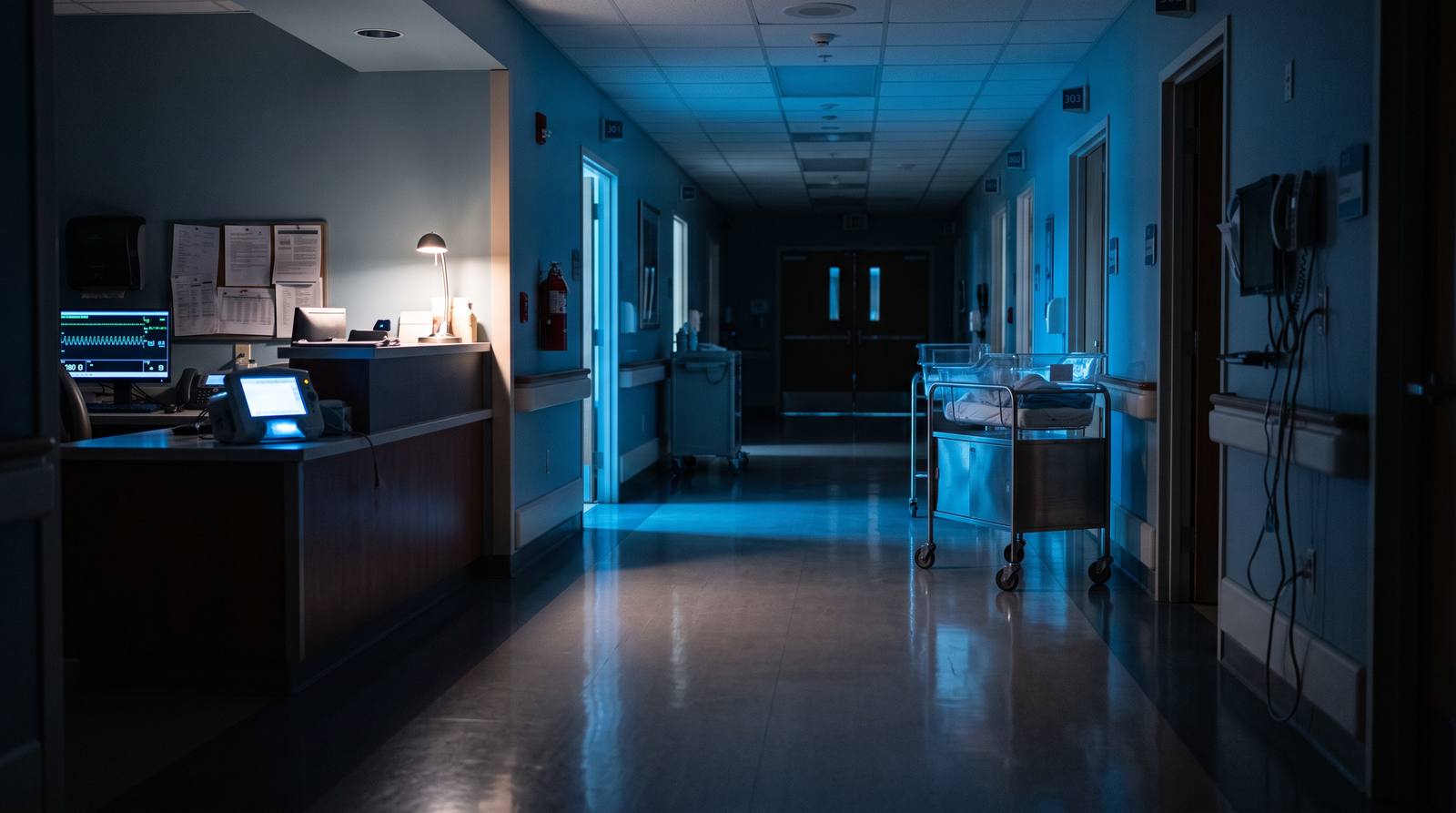

This page is for families who welcomed a baby at Alta Bates Summit Medical Center, Alta Bates Campus, at 2450 Ashby Avenue in Berkeley, Alameda County, California, and who now have questions about a difficult delivery or a child's health. You may be a parent who was told your baby needed the intensive care nursery, a grandparent helping a new family, or a mother who is worried about what happened to her own health during labor. You are not alone, and asking questions is a normal, reasonable step.
Alta Bates Summit Medical Center is part of Sutter Health, a nonprofit health system. According to the hospital's own website, the Alta Bates Campus is a Baby-Friendly designated birth center with 22 labor and delivery suites, more than 4,000 births a year and a Level III NICU. Most births at any hospital go well. This page does not say that anything went wrong at this hospital. It explains, in plain words, what birth injuries are, what warning signs to watch for and how families can learn more about their options.
Beverly Law prepared this guide so that parents can understand the process before making any decision. It is general information, not legal or medical advice, and it is available in English and Spanish. Reading it does not create an attorney-client relationship, and every family's situation is different.
Was your baby hurt during delivery?
Tell us your name and phone. We call you back today, in English or Spanish, and the consultation is free.
Free consultation · English y Español · No fees or costs unless we win
At a glance: Alta Bates Summit Medical Center | Alta Bates Campus
| Address | 2450 Ashby Avenue, Berkeley, CA 94705 |
| County | Alameda County |
| Health system / operator | Sutter Health |
| Type of hospital | Private nonprofit hospital |
| Newborns in 2024 | 3,330 (report to the state, HCAI) |
| Licensed NICU beds | 55 |
| NICU level | Level III |
| Main phone | 510-204-4444 |
| Hospital website | sutterhealth.org/find-location/facility/alta-bates-summit-medical-center-alta-bates-campus |
Sources: HCAI — 2024 Hospital Annual Utilization Report and the hospital’s own website.
Labor and delivery at Alta Bates Summit Medical Center in Berkeley
The state's official name for the hospital is Alta Bates Summit Medical Center-Alta Bates Campus. It is a private nonprofit hospital at 2450 Ashby Avenue in Berkeley, and its parent organization is Sutter Health. The hospital's website describes the Alta Bates Campus Birth Center as open around the clock, with private rooms, 22 labor and delivery suites, a Baby-Friendly designation, and services that include fetal monitoring, midwife services, doulas, breastfeeding support and hydrotherapy. It also lists a Level III NICU.
According to the hospital's 2024 report to the state (HCAI), the hospital cared for 3,330 newborns in its newborn nursery during 2024. The same report lists 55 licensed intensive-care newborn beds and 609 NICU discharges for the year. These numbers measure different things, so they should not be added together or compared with the hospital's own estimate of more than 4,000 births a year. Taken together, they show a busy East Bay birth center that serves families from Berkeley and the surrounding communities of Alameda County.
A Level III NICU is designed to care for babies who are born early or who are sick. If your baby spent time in the NICU, that does not by itself mean that anything went wrong. Many babies need extra support after birth, and the NICU team is there to provide it. What matters for a family is understanding what happened, what the baby's long-term needs may be and what records exist.
Birth injuries families ask about after a difficult delivery
Doctors use the term birth injury for harm to a baby or a mother during pregnancy, labor or delivery. One of the most serious is hypoxic-ischemic encephalopathy (HIE), brain injury that can follow a lack of oxygen or blood flow around the time of birth. Cerebral palsy is a group of lifelong movement and posture conditions caused by problems in the developing brain. The CDC explains that cerebral palsy has many possible causes, and that in most children the brain difference happens before or around birth, though a specific cause often cannot be identified.
Other conditions families ask about include Erb's palsy and other brachial plexus injuries, which affect the nerves that control the shoulder, arm and hand and can happen when a baby's shoulder is stretched during delivery. Newborns can also have brain bleeds, a broken collarbone or skull fracture, and infections. Group B strep (GBS) is a common bacterium that many healthy women carry; the CDC explains that it can pass to a baby during birth and cause serious infection, which is why pregnant women are routinely tested late in pregnancy and offered treatment when needed.
Mothers can be hurt too. Heavy bleeding after delivery (postpartum hemorrhage), infection, tears and complications after a cesarean birth are examples. Many of these conditions can happen even when everyone does everything right, and some are not preventable. This section is general medical background drawn from public health sources. It is not a statement about any hospital or any patient.

Warning signs of a birth injury in the first days, weeks and months
In the first days, parents and nurses watch for trouble breathing, a weak or unusual cry, poor feeding, unusual sleepiness, floppy or very stiff muscles, seizures (repeated jerking, staring or lip-smacking), a low or unstable temperature, yellow skin that keeps getting worse, or a baby who does not move one arm. If you notice any of these in the hospital, tell your nurse right away. If you see them at home, call your pediatrician or 911.
In the weeks and months that follow, some signs appear slowly. Examples include difficulty feeding or swallowing, a head that seems to lag when the baby is lifted, tight fists beyond the early months, keeping one hand or arm still, a strong preference for one side of the body, or missing early milestones such as holding up the head, following faces, rolling over or sitting. The CDC has free milestone checklists and the Learn the Signs. Act Early program for parents who want to track development.
Delays do not always mean an injury occurred, and babies develop at different speeds. Still, if something worries you, ask your pediatrician for a developmental screening and write down what you see and when. Early evaluation helps your child get therapy sooner, whatever the cause, and your notes can also help any later review of what happened.
Free birth-injury case review
We review the delivery records with medical experts and tell you honestly whether there is a case. You pay no fees or costs unless we win.
Who may be responsible in a birth injury claim
When a family asks whether a birth-injury claim exists, the answer depends on the facts of each delivery. Care during labor involves many people, and a review looks at each role. Those who may be involved include obstetricians, nurse-midwives and midwives, labor and delivery nurses, anesthesiologists, neonatologists and pediatricians, and the medical group or the hospital that employs or contracts with them. The review asks what each person knew, what was done and what a reasonably careful provider would have done in the same situation.
One question often surprises families: who actually employed the doctor? Some physicians are employees of a hospital or health system, while others are independent doctors or belong to a separate medical group, even though they work inside the hospital. Nurses and other staff are usually employed by the hospital. This difference can affect which parties are named in a claim, so it is something a lawyer reviews carefully using the records.
Nothing here suggests that any person at this hospital did something wrong. Many birth outcomes are not caused by anyone's mistake. The purpose of a review is simply to find out, with the help of qualified medical experts, whether a claim is supported by the records, and to protect the child's rights if it is.
How an independent expert review of the delivery works
A careful review starts with the complete medical records of both mother and baby. Lawyers usually ask independent physicians, such as obstetricians, neonatologists and pediatric neurologists, to read the chart. These experts have no stake in the outcome; their job is to tell the family honestly what the records show, including when they show nothing wrong.
Reviewers focus on certain documents. The fetal heart monitoring strips show the baby's heart rate and the mother's contractions across labor. The Apgar scores rate the baby's condition at one and five minutes after birth. Umbilical cord blood gases can show how much oxygen the baby received. Nursing notes and physician orders show who knew what and when, and the NICU notes track treatment in the hours and days that followed.
Later imaging, especially a brain MRI, and a child's neurological evaluations help experts connect an injury to the timing of the birth, and they also help estimate the child's future care needs. The review can take several months. At the end, the family should understand whether the records support a claim, what the next steps are and what they will cost, with no obligation to proceed.
What to do now after a birth injury: step by step
First, take care of your child. Keep every pediatric, specialist and therapy appointment, and ask each doctor to explain the diagnosis in plain words. Keep a notebook or phone file with dates, symptoms, medicines and the names of the departments you spoke to. Ask for copies of discharge papers, test results and imaging reports.
Second, request the records in writing, for both mother and baby, including the fetal monitoring strips. Do not wait to feel certain about a claim, because records are easier to gather early. Third, speak with a lawyer who handles birth-injury cases soon, because California has strict deadlines that can be much shorter than families expect, especially for parents' own claims and for any public hospital. The page adds verified deadline information below.
Fourth, be careful with social media and with signing documents from insurers. Fifth, connect with early intervention and your child's pediatrician so that therapy does not wait for a legal answer. A first conversation with a lawyer is a way to ask questions, and it does not commit you to anything.
Support while a birth injury case is reviewed
Your child's care should not wait for a legal review. Depending on the diagnosis, children may benefit from physical, occupational and speech therapy, early-intervention services, specialist care, equipment and help at school. Families often combine several programs, and no one program covers everything.
For babies and toddlers under three, California's Early Start program, run through the regional centers, offers evaluation and services for infants with delays or conditions that may cause delays. Children with qualifying conditions may also be eligible for Medi-Cal and California Children's Services (CCS), which can help pay for specialty care. Eligibility depends on the child's diagnosis and the family's circumstances, so ask a social worker or the program directly.
Caring for a child with special needs is demanding for parents too. Ask your pediatrician about parent support groups, respite options and counseling. These are general suggestions only, and no result can be promised for any program or any case.
Deadlines for a birth-injury case in California
California gives a child’s birth-injury case its own deadline. Under Code of Civil Procedure § 340.5, a minor must sue within three years of the wrongful act, but a child who was under six when it happened has until his or her eighth birthday if that is longer. For a baby hurt during labor or delivery, that usually means the eighth birthday. The clock runs from the act itself, not from the day the family learned what went wrong, and it is paused only in narrow cases of fraud or collusion. Parents’ own claims, and claims against a public hospital, can have much shorter deadlines, so it is safer to get advice early.
Before a medical malpractice lawsuit can be filed in California, the doctor or hospital must get written warning. Under Code of Civil Procedure § 364, the health care provider must receive at least 90 days’ notice of the intention to sue. No special form is required, but the notice must state the legal basis of the claim, the type of loss and the specific injuries suffered. Under § 364(d), if the notice is served within the last 90 days of the filing deadline, the deadline is extended 90 days from the date of service. The notice is a required step, and it is often the moment a case moves from questions to formal action.
What MICRA caps — and what it does not
California’s MICRA law limits one part of a medical malpractice recovery. Under Civil Code § 3333.2, as amended by AB 35, non-economic damages (pain, suffering, loss of enjoyment of life) are capped. In 2026 the cap is $470,000 for injury and $650,000 for wrongful death, and it rises every January 1 ($40,000 and $50,000 a year until 2033, then 2% a year). Separate caps can apply to doctors, hospitals and unaffiliated providers. Economic damages are not capped: lifetime medical care, therapy, equipment, home modifications and lost earning capacity can be recovered in full, and in a birth-injury case they are usually the largest part of the claim.
How to get the delivery records from Alta Bates Summit Medical Center
California law gives families a right to these records. Under Health and Safety Code § 123110, a patient or the patient’s personal representative — for a baby, a parent or guardian (§ 123105) — may inspect the records within five working days of a written request and is entitled to a paper or electronic copy, which the provider must send within 15 days after receiving a request that says which records are wanted. For a birth-injury review, ask for both charts: the mother’s labor and delivery record, including the fetal heart rate monitoring strips, and the baby’s newborn and NICU record.
Alta Bates Summit Medical Center is part of Sutter Health, and Sutter handles medical records requests through its Health Information Management process. On its request-records page, Sutter explains that you can ask for records online (with a photo ID upload) or by sending a signed authorization form, and that you will be told about any fees in advance. For a baby, a parent or guardian can make the request. Ask for both the mother's and the baby's complete charts, including labor and delivery records, the fetal heart monitoring strips, nursing notes, cord blood gas results and NICU records, and keep a copy of whatever you send. You can also call the hospital at 510-204-4444 and ask for Health Information Management (medical records).
The hospital’s medical records page →
Where a case from Berkeley would be filed
A birth-injury lawsuit involving a delivery in Berkeley would usually be filed in the Superior Court of California, County of Alameda, in the civil division. According to the court's website, general civil cases are handled at the René C. Davidson Courthouse, 1225 Fallon Street, Oakland, CA 94612. The court also has a courthouse in Hayward, and where a particular case is filed depends on the type of case and the court's rules, so a lawyer confirms the right location before anything is filed.
Superior Court of California, County of Alameda — René C. Davidson Courthouse → — 1225 Fallon Street, Oakland, CA 94612
Help for your child now: Early Start in Alameda County
In Berkeley and the rest of Alameda County, Early Start (California's early-intervention program for babies and toddlers under 3 with delays or conditions that may cause delays) is arranged through the Regional Center of the East Bay (RCEB), which is part of California's Department of Developmental Services system. The state's Early Start directory lists the RCEB Early Start intake line at (510) 618-6195, and the center's website is rceb.org. You do not need a lawyer or a diagnosis to ask. Call, say that you are worried about your baby's development, and ask for an Early Start evaluation. Your pediatrician can also refer you.
Regional Center of the East Bay (RCEB) →
Key facts
- Alta Bates Summit Medical Center, Alta Bates Campus, at 2450 Ashby Avenue in Berkeley is a nonprofit hospital that is part of Sutter Health.
- According to the hospital's own website, the Alta Bates Campus has 22 labor and delivery suites, more than 4,000 births a year and a Level III NICU.
- According to the hospital's 2024 report to the state (HCAI), it cared for 3,330 newborns in its nursery and had 55 licensed NICU beds and 609 NICU discharges that year.
- A baby who needed the NICU did not necessarily suffer a birth injury, and an independent expert review of the records is how families learn what the chart shows.
- California has strict deadlines for birth-injury claims, so it is safest to ask questions and request the medical records early.
Questions parents ask
Can I file a birth-injury claim against Alta Bates Summit Medical Center?
Whether a claim exists depends on what the medical records show, not on the hospital's name. A family can ask for an independent review of the labor, delivery and newborn records by qualified physicians. If the records support a claim, a lawyer can explain who may be responsible and what steps come next. If they do not, the review at least gives you answers.
How long do I have to take action after a birth injury in Berkeley?
California gives a child's birth-injury case its own deadline, and for a baby hurt during labor or delivery it usually means the child's eighth birthday, running from the act itself and not from when the family learned about it. Parents' own claims can have much shorter deadlines, and a written notice of intent to sue must be sent to the provider at least 90 days before filing. Because the rules are strict, it is safer to get advice early.
Is Alta Bates Summit Medical Center a public hospital?
No. The state's 2024 report classifies the hospital as a private nonprofit corporation, and its parent organization is Sutter Health. The shorter six-month claim that applies to county and University of California hospitals is therefore not the usual rule for a private nonprofit hospital, but a lawyer should confirm which rules apply to each provider involved in your care.
What if my doctor did not work for the hospital?
Many doctors who deliver babies are independent physicians or belong to a separate medical group, even though they work inside a hospital. That does not close the door to a claim. A lawyer looks at the records and the employment relationships to see which doctors, medical groups or hospital staff may be involved.
How do I get my fetal monitoring strips from Alta Bates Summit Medical Center?
Make a written request for the mother's and baby's complete charts through Sutter Health's medical records request page, online with a photo ID or by a signed authorization form. Ask specifically for the fetal heart monitoring strips, nursing notes, cord blood gas results and NICU records. California law gives patients and, for a baby, a parent or guardian, a right to these records, and a lawyer can help if you run into delays.
Does it cost anything to talk to a lawyer about a birth injury?
A first conversation to ask questions and review your options is generally free, and you are not obligated to hire anyone. Ask any lawyer how fees and case costs are handled before you agree to anything. Early Start evaluations and many therapies are separate from any legal question and do not depend on one.
Ask a question
Not ready to call? Write your question and a member of our team answers you — no cost, no commitment.
Alta Bates Summit Medical Center | Alta Bates Campus Birth Injury Lawyers — Beverly Law
Free case review for families in Berkeley. We obtain the delivery records, have them reviewed by medical experts and deal with the hospital and its insurer — you focus on your child. You pay no fees or costs unless we win.
Related pages
Cerebral Palsy · Erb’s Palsy / Brachial Plexus Injury · HIE / Oxygen Deprivation at Birth · Statute of Limitations · MICRA Damages Cap · All California hospitals · California birth injury lawyers · Birth injury guides
Sources
- HCAI — 2024 Hospital Annual Utilization Report (final, October 2025)
- Sutter Health — Alta Bates Summit Medical Center, Alta Bates Campus — Official hospital name, address, phone, 22 labor and delivery suites, more than 4,000 births a year, Level III NICU, Baby-Friendly designation.
- Sutter Health — Alta Bates Campus Birth Center — Shows labor and delivery is offered; lists fetal monitoring, midwife services, doulas, hydrotherapy and the Level III NICU.
- HCAI — Annual Utilization Report of Hospitals (2024) — State-reported newborn nursery count, licensed NICU beds, NICU discharges, type of control and parent organization.
- Sutter Health — Request Medical Records — How to request medical records online or by authorization form.
- Superior Court of California, County of Alameda — René C. Davidson Courthouse — Courthouse name and address, 1225 Fallon Street, Oakland, for civil cases.
- California Department of Developmental Services — Early Start intake and family resource centers — Regional Center of the East Bay listed for Alameda County with the Early Start intake phone.
- Regional Center of the East Bay — Regional center that serves Alameda and Contra Costa counties; address in San Leandro.
- CDC — About Cerebral Palsy — General facts on cerebral palsy, its causes and timing.
- CDC — About Group B Strep — How GBS can pass to a baby during birth and why pregnant women are tested.
- CDC — Learn the Signs. Act Early. Developmental Milestones — Milestone checklists for tracking a child's development.
- Code of Civil Procedure § 340.5
- Code of Civil Procedure § 364
- Civil Code § 3333.2 (as amended by AB 35, 2022)
- Health and Safety Code § 123110 (patient access to records)
Beverly Law is an independent law firm. We are not affiliated with, endorsed by or speaking for Alta Bates Summit Medical Center | Alta Bates Campus or Sutter Health. Hospital facts on this page come from the public sources listed above.
Important: This page is general information about birth injuries and California law, not legal advice, and reading it does not create an attorney-client relationship with Beverly Law. Every case is different — talk to a lawyer about your own situation. Attorney advertising. Prior results do not guarantee a similar outcome. No fees or costs unless we win. Last reviewed: 2026-09-18.