
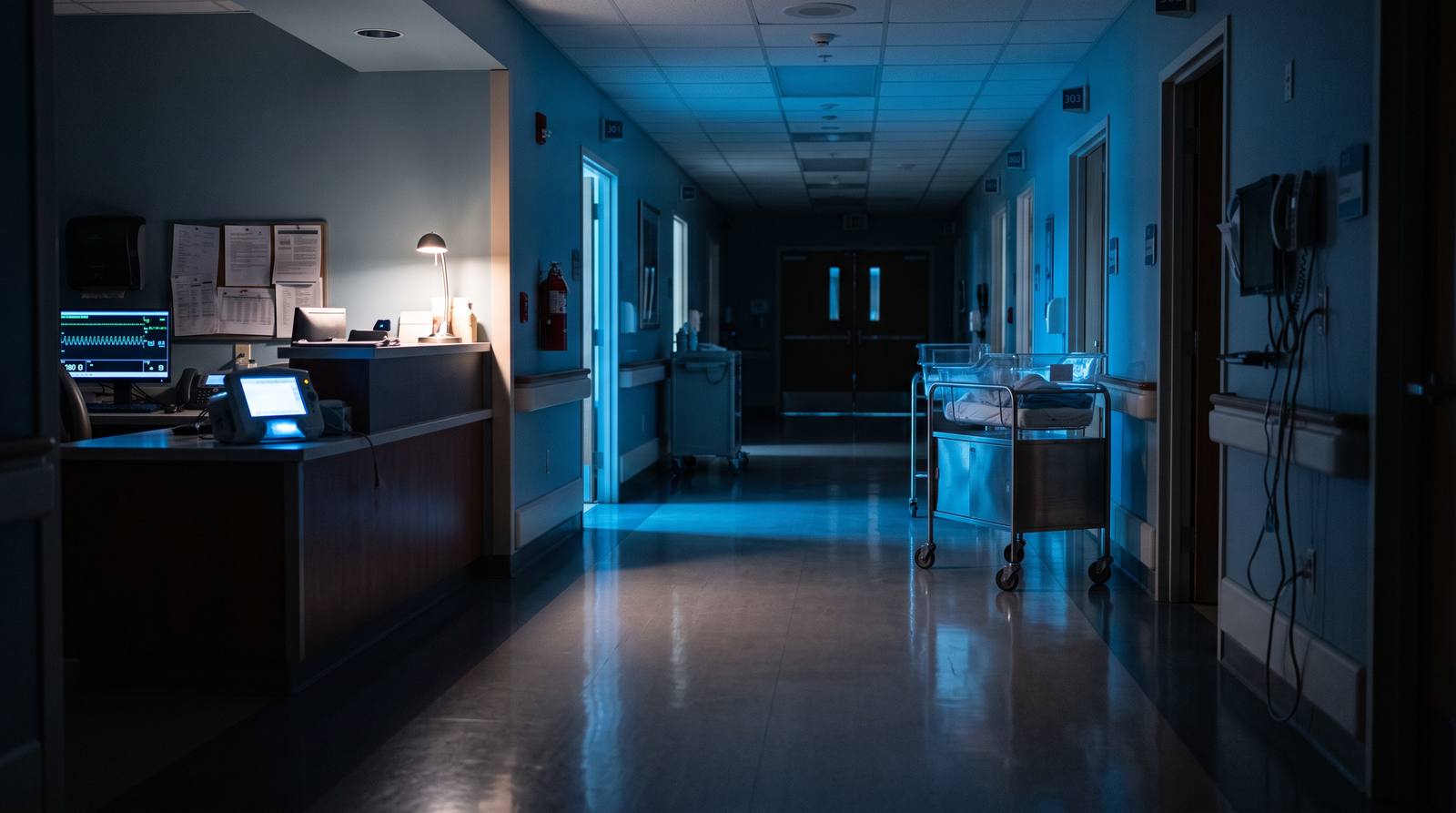

If your baby was born at Kaiser Permanente San Leandro Medical Center at 2500 Merced Street in San Leandro, Alameda County, and the delivery was frightening, or your child is now showing health or developmental concerns, you probably have questions. This page is written for parents and guardians who delivered at this hospital and want to understand what a birth injury is, what the warning signs look like, and what options exist. It is general information, not legal advice about any particular birth.
Most babies born at this hospital, like most babies everywhere, are healthy. According to the hospital's 2024 report to the state (HCAI), the newborn nursery cared for 3,133 babies that year, and the hospital reported 288 discharges from its neonatal intensive care unit (NICU), which is licensed for 20 intensive-care newborn beds. Some labors become complicated, though, and when a baby is hurt around the time of birth, families often feel they have been left without answers.
Nothing here says that anything went wrong at this hospital or with any person who cared for you. Our purpose is to explain, in plain words, how birth injuries are understood medically, how records are reviewed by independent experts, and what a family can do to protect its rights and its child's future. If you need to talk to someone about your own situation, Beverly Law offers a free, confidential conversation, and we are happy to explain how the process works.
Was your baby hurt during delivery?
Tell us your name and phone. We call you back today, in English or Spanish, and the consultation is free.
Free consultation · English y Español · No fees or costs unless we win
At a glance: Kaiser Permanente San Leandro Medical Center
| Address | 2500 Merced Street, San Leandro, CA 94577 |
| County | Alameda County |
| Health system / operator | Kaiser Permanente (Kaiser Foundation Hospitals) |
| Type of hospital | Kaiser Permanente hospital (private nonprofit) |
| Newborns in 2024 | 3,133 (report to the state, HCAI) |
| Licensed NICU beds | 20 |
| Main phone | 510 454-4291 |
| Hospital website | healthy.kaiserpermanente.org/northern-california/health-wellness/maternity/find-hospital/san-leandro |
Sources: HCAI — 2024 Hospital Annual Utilization Report and the hospital’s own website.
Labor and delivery at Kaiser Permanente San Leandro Medical Center
Kaiser Permanente San Leandro Medical Center is part of Kaiser Permanente and sits at 2500 Merced Street in San Leandro. According to the state's records, the hospital is licensed as a non-profit corporation, and its main phone number is 510 454-4291. Kaiser Permanente's own maternity pages for this medical center describe a labor and delivery unit on the third floor, private labor and postpartum rooms, and an obstetrical team that is available 24 hours a day, 7 days a week.
The hospital's website says a family's care team can include obstetricians, certified nurse-midwives, neonatologists (doctors who specialize in newborn care) and anesthesiologists. Its virtual tour explains that nurses use fetal monitors during labor, that interpreters are available on request, and that babies who need extra help can be cared for in the neonatal intensive care unit, known as the NICU. We have not found the hospital's own site stating a numbered NICU level, so we do not give one here.
According to the hospital's 2024 report to the state (HCAI), the hospital had 3,133 newborns in its nursery, 20 licensed intensive-care newborn beds and 288 NICU discharges. The California Department of Health Care Services also lists the medical center as a California Children's Services special care center for community-level newborn intensive care, which matters to families because that program can help with the cost of care for some children with serious conditions.
The hospital serves families in southern Alameda County, including San Leandro, Hayward, San Lorenzo, Castro Valley and nearby communities. Many of them are Kaiser Permanente members, and many speak Spanish at home. That is why we publish this page in English and Spanish.
Birth injuries families ask about after a difficult delivery
A birth injury is harm to a baby that happens before, during or shortly after delivery. Some injuries are caused by the natural process of birth and cannot be prevented. Others may be linked to how a complication was recognized and handled. Doctors often cannot tell the difference at the bedside, which is why an independent review of the records is so useful. Below are the conditions parents ask about most often. These are general medical facts and are not about any one hospital.
Hypoxic-ischemic encephalopathy (HIE) is brain injury from too little oxygen or blood flow around the time of birth. The National Institute of Child Health and Human Development (NICHD) reports that cooling treatment, started in the first hours of life for late preterm and term babies, reduced death and disability in a major trial. Possible triggers include a compressed umbilical cord, a placenta that separates early, or a rupture of the uterus. Babies with HIE may be very limp, have seizures or need help breathing, and are often moved to the NICU.
Cerebral palsy (CP) is a group of conditions that affect movement, balance and posture. The CDC explains that most cases are congenital, meaning the brain was injured or developed differently before or during birth, and that often no single cause is found. Lack of oxygen during birth accounts for only a small share of cases, according to the CDC, so a CP diagnosis does not by itself show that a delivery was handled poorly. The main sign is delayed motor milestones, and the CDC says parents can contact early intervention without waiting for a referral.
Erb's palsy, also called brachial plexus palsy, is an injury to the nerves that run from the neck into the arm. Cleveland Clinic explains that it is often linked to a shoulder that becomes stuck during delivery. Many babies recover with therapy over the first months, and surgery is considered when there is not enough improvement. Other injuries families ask about include bleeding in or around the newborn brain, a broken collarbone or a skull fracture, infections such as group B strep (GBS) that were not caught in time, and injuries to the mother such as severe postpartum hemorrhage. Each has its own causes, treatments and outlook, and your child's doctors are the best source of information about your child.

Warning signs of a birth injury in the first days, weeks and months
In the first hours and days, signs that doctors watch for include a very low Apgar score, trouble breathing or feeding, unusual limpness or stiffness, seizures, a weak or unusual cry, and a baby who is hard to wake. Newborns may also be moved to the NICU for cooling, oxygen support or monitoring. If you were told your baby needed special care, it is reasonable to ask the care team to explain why, in words you understand, and to keep notes.
In the first weeks and months, parents often notice that one arm is not moving like the other, that the baby seems unusually stiff or floppy, that feeding is hard, or that the baby does not follow faces or sounds. The CDC lists head lag when the baby is lifted, arching of the back and neck, and stiff legs among the early signs of cerebral palsy in babies under six months. After six months, not rolling over, not bringing hands together, or using only one hand can be warning signs.
Many of these signs also occur in children who turn out to be fine, and they do not prove that a birth injury happened. But if something worries you, do not wait. Tell your pediatrician, write down what you see with dates, take short videos of the movements that concern you, and ask about a developmental evaluation. Early therapy helps children, and early records help families understand what happened.
Mothers should also pay attention to their own health after delivery. Heavy bleeding, fever, severe pain, or feeling very unwell are reasons to call your care team or seek emergency care right away.
Free birth-injury case review
We review the delivery records with medical experts and tell you honestly whether there is a case. You pay no fees or costs unless we win.
Who may be responsible in a birth injury claim
Many people take part in a delivery, and responsibility in a birth injury claim depends entirely on the facts. In general, a review may look at the actions of the obstetrician or the midwife, the labor and delivery nurses who watch the fetal heart monitor, the anesthesia team, the pediatric or neonatal doctors who care for the baby after birth, and the hospital or medical group that employs or supervises them. A claim may involve one person, several, or none at all if the review finds the care was appropriate.
One question that matters is who employed the clinicians. Some doctors are employees of the hospital or the medical group, while others are independent physicians who see patients at several hospitals. This affects who may be responsible and which insurance applies. Kaiser Permanente works through a particular structure of hospitals and medical groups, and the way a family is covered, for example as a Kaiser member, can also affect how a claim proceeds. A lawyer can sort this out from your records, so you do not have to.
A claim generally asks whether a provider failed to meet the accepted standard of care, meaning what a reasonably careful provider would have done in the same situation, and whether that failure caused the injury. Bad outcomes alone do not make a case. This is why expert review comes first.
Both the baby and the parents can have separate interests. The child's claim covers the child's care and losses, and parents may have their own claims. Deadlines for these can be very different, so it is safest to ask for advice early.
How an independent expert review of a delivery works
An independent review begins with the medical records. A lawyer gathers the mother's labor and delivery chart and the baby's chart, then asks qualified physicians and nurses, such as an obstetrician, a neonatologist and a pediatric neurologist, to read them and give an honest opinion. If the experts do not find a problem, the family learns that too, and that answer can bring peace of mind.
Reviewers look at specific documents. The fetal heart monitoring strips show the baby's heart rate and the mother's contractions across labor, and experts compare them with what the chart says staff noticed and did. The Apgar scores at one and five minutes describe how the baby looked at birth. Cord blood gas results show the baby's acid level at delivery. NICU notes show treatments such as oxygen, cooling and seizure medication. Brain imaging, such as an MRI, can show the pattern and timing of an injury, and later therapy and developmental records show how the child is doing.
Experts also consider timing: when problems began, what the team knew, how quickly decisions were made, and whether a cesarean or other intervention was considered. They also consider causes unrelated to care, such as genetic conditions, infection, or problems that began in pregnancy.
Before a medical malpractice lawsuit can be filed, California law requires written notice to the provider, and an expert review is usually what supports that notice. For members of Kaiser Permanente, claims of this kind usually go through binding arbitration rather than a jury trial, so the review is also the base for that process.
What to do now: step by step after a difficult birth
First, put your child's health first. Keep every pediatric appointment, follow the recommendations of your child's doctors and ask questions. Nothing about a legal review should delay care.
Second, write down what you remember while it is fresh: the dates, the times, what you were told, who was present, and any symptoms you noticed. Keep discharge papers, bills, insurance letters, photos, and any messages from your patient portal. Please do not post details on social media, since posts can be used later.
Third, request the records. You have a legal right to the records of your child's birth and of your own care, and the hospital's records office can tell you how to ask. Request the full chart, including the fetal monitoring strips, and keep a copy of your request and the date.
Fourth, do not wait because deadlines are strict. California gives a child's claim its own deadline, but parents' claims can be shorter, and the six-month claim for public hospitals is much shorter. Kaiser members' claims follow a different path, binding arbitration, and still must be started on time.
Fifth, talk to a lawyer who handles birth injuries. At Beverly Law the first conversation is free and confidential. We will explain the options and you decide what to do.
Support for your child and family while a case is reviewed
Whatever happens with a legal review, your child may qualify for help right now. In California, the Early Start program offers evaluations and services for babies and toddlers under three who have, or may be at risk for, a developmental delay or disability. Your pediatrician can refer you, and you can also contact the regional center yourself. Services can include physical, occupational and speech therapy, and they are meant to be provided in the places where your family lives and plays.
Medi-Cal may help cover medical care for eligible children, and California Children's Services (CCS) can help with the cost of care for some children with qualifying medical conditions. Your child's doctors or the county CCS office can tell you whether your child may qualify. Many families also find support from other parents, school districts after age three, and community groups for children with cerebral palsy or brachial plexus injuries.
We cannot promise any particular result in any case, and we do not ask families to choose between getting help now and learning more about their legal options. You can do both. If you want to talk, we are here, in English or Spanish.
Kaiser members: arbitration instead of a jury
Kaiser Permanente works differently from most hospitals. Kaiser’s own member materials explain that members agree to binding arbitration instead of a jury or court trial for certain matters, that a member who believes their care was negligent can ask for binding arbitration, and that the arbitrator’s decision is binding on both the member and Kaiser Permanente. These arbitrations are run by a neutral Office of the Independent Administrator (oia-kaiserarb.com), not by Kaiser. For a family who delivered at a Kaiser hospital as Kaiser members, that usually means a birth-injury claim is decided by an arbitrator rather than a jury — and the claim still has to be started on time, so it is important not to wait.
Deadlines for a birth-injury claim in California
California gives a child’s birth-injury case its own deadline. Under Code of Civil Procedure § 340.5, a minor must sue within three years of the wrongful act, but a child who was under six when it happened has until his or her eighth birthday if that is longer. For a baby hurt during labor or delivery, that usually means the eighth birthday. The clock runs from the act itself, not from the day the family learned what went wrong, and it is paused only in narrow cases of fraud or collusion. Parents’ own claims, and claims against a public hospital, can have much shorter deadlines, so it is safer to get advice early.
California’s MICRA law limits one part of a medical malpractice recovery. Under Civil Code § 3333.2, as amended by AB 35, non-economic damages (pain, suffering, loss of enjoyment of life) are capped. In 2026 the cap is $470,000 for injury and $650,000 for wrongful death, and it rises every January 1 ($40,000 and $50,000 a year until 2033, then 2% a year). Separate caps can apply to doctors, hospitals and unaffiliated providers. Economic damages are not capped: lifetime medical care, therapy, equipment, home modifications and lost earning capacity can be recovered in full, and in a birth-injury case they are usually the largest part of the claim.
How to get the delivery records from Kaiser Permanente Medical Center
California law gives families a right to these records. Under Health and Safety Code § 123110, a patient or the patient’s personal representative — for a baby, a parent or guardian (§ 123105) — may inspect the records within five working days of a written request and is entitled to a paper or electronic copy, which the provider must send within 15 days after receiving a request that says which records are wanted. For a birth-injury review, ask for both charts: the mother’s labor and delivery record, including the fetal heart rate monitoring strips, and the baby’s newborn and NICU record.
To get your records from Kaiser Permanente San Leandro Medical Center, send a written request to the hospital's medical records (release of information) office, or follow the steps on Kaiser Permanente's medical record help page. Kaiser says written requests go to the facility where the care was given, and its Member Services line, 1-800-464-4000 (TTY 711), can give you the address and explain the process. As a parent or guardian you can ask for your baby's chart as well as your own labor and delivery chart. Ask for the complete record, including the fetal heart monitoring strips, Apgar scores, cord blood gas results and NICU notes, and keep a copy of your request.
The hospital’s medical records page →
Where a case from San Leandro would be filed
A civil birth-injury case in Alameda County is filed in the Superior Court of California, County of Alameda, and the court's civil division lists the René C. Davidson Courthouse, 1225 Fallon Street, Oakland, CA 94612, among its civil locations; the court assigns the case to a department. For families who delivered at Kaiser Permanente as members, however, these claims usually go to binding arbitration instead of court.
Superior Court of California, County of Alameda – René C. Davidson Courthouse → — 1225 Fallon Street, Oakland, CA 94612
Help for your child now: Early Start in Alameda County
Early Start is California's early intervention program for babies and toddlers under 3 with a developmental delay or a condition that puts them at risk. Families in San Leandro and the rest of Alameda County are served by the Regional Center of the East Bay (rceb.org). You can ask for an evaluation yourself, without a doctor's referral: the state lists the Early Start intake number for this regional center as (510) 618-6195. Tell them your baby's age and your concerns, and ask for the evaluation in writing if you can.
Regional Center of the East Bay →
Key facts
- Kaiser Permanente San Leandro Medical Center is at 2500 Merced Street in San Leandro, Alameda County, and its website describes a labor and delivery unit with an obstetrical team available around the clock.
- According to the hospital's 2024 report to the state (HCAI), it cared for 3,133 newborns in its nursery and has 20 licensed intensive-care newborn beds.
- Kaiser Permanente is a private nonprofit health system, so the Government Claims Act's six-month claim for public hospitals does not usually apply, but strict deadlines still do.
- A baby hurt during labor or delivery usually has until the eighth birthday to sue, but parents' own claims can be shorter, so it is safer to get advice early.
- Kaiser members usually resolve birth-injury claims in binding arbitration, not a jury trial, and the claim still has to be started on time.
Questions parents ask
Can I file a birth-injury claim against Kaiser Permanente San Leandro Medical Center?
Possibly, if an independent review of the records finds that the care fell below accepted standards and caused your child's injury. A bad outcome alone is not enough. For Kaiser members, claims usually go to binding arbitration rather than court. A lawyer can review the records and explain whether a claim makes sense.
How long do I have to file a birth-injury claim?
California gives a child's birth-injury case its own deadline, which for a baby hurt at birth usually runs to the eighth birthday. The clock runs from the act itself, not from when you learned of it. Parents' own claims can have much shorter deadlines, so it is safer to get advice early.
Is Kaiser Permanente San Leandro Medical Center a public hospital?
No. It is part of Kaiser Permanente, a private nonprofit health system, so the six-month government claim rule for county and University of California hospitals does not usually apply. Strict deadlines and the arbitration process for Kaiser members still do.
What if my doctor did not work for the hospital?
Some doctors are employed by the hospital or medical group and others are independent physicians. That can change who may be responsible and what insurance applies. A lawyer can sort this out from your records, so a doctor's employment status does not stop you from asking questions.
How do I get my fetal monitoring strips from Kaiser Permanente San Leandro Medical Center?
Send a written request to the hospital's medical records office, or use Kaiser's medical record help page; Member Services at 1-800-464-4000 can give the address. California law gives a parent or guardian the right to a baby's records. Ask for the full chart, including the monitoring strips, and keep a copy of your request.
Does it cost anything to talk to a lawyer about a birth injury?
No. The first conversation with Beverly Law is free and confidential. We explain your options and the deadlines, and you decide what to do next. Nothing you tell us is shared without your permission.
Ask a question
Not ready to call? Write your question and a member of our team answers you — no cost, no commitment.
Other Alameda County hospitals we cover
Alta Bates Summit Medical Center
Kaiser Permanente San Leandro Medical Center Birth Injury Lawyers — Beverly Law
Free case review for families in San Leandro. We obtain the delivery records, have them reviewed by medical experts and deal with the hospital and its insurer — you focus on your child. You pay no fees or costs unless we win.
Related pages
Cerebral Palsy · Erb’s Palsy / Brachial Plexus Injury · HIE / Oxygen Deprivation at Birth · Statute of Limitations · MICRA Damages Cap · All California hospitals · California birth injury lawyers · Birth injury guides
Sources
- HCAI — 2024 Hospital Annual Utilization Report (final, October 2025)
- Kaiser Permanente – San Leandro Medical Center maternity care team — Labor and delivery care team and 24/7 obstetrical availability
- Kaiser Permanente – San Leandro maternity virtual tour — Labor and delivery unit, postpartum unit and NICU description
- DHCS California Children's Services – Kaiser Permanente San Leandro Medical Center — CCS special care center listing including community NICU
- Kaiser Permanente – Help with medical records — Where to start a medical record request
- Superior Court of California, County of Alameda – Civil — Civil court locations and personal injury jurisdiction
- Superior Court of California, County of Alameda – Locations — René C. Davidson Courthouse address
- California Department of Developmental Services – Early Start intake — Regional Center of the East Bay Early Start intake number
- CDC – About Cerebral Palsy — Causes and early signs of cerebral palsy
- NICHD – Scan after newborn cooling treatment predicts outcome — Cooling treatment for newborn brain injury from oxygen deprivation
- Cleveland Clinic – Erb's Palsy — Erb's palsy causes and treatment
- Code of Civil Procedure § 340.5
- Civil Code § 3333.2 (as amended by AB 35, 2022)
- Health and Safety Code § 123110 (patient access to records)
- Kaiser Permanente — Member resource guide, California (binding arbitration, Office of the Independent Administrator)
Beverly Law is an independent law firm. We are not affiliated with, endorsed by or speaking for Kaiser Permanente San Leandro Medical Center or Kaiser Permanente (Kaiser Foundation Hospitals). Hospital facts on this page come from the public sources listed above.
Important: This page is general information about birth injuries and California law, not legal advice, and reading it does not create an attorney-client relationship with Beverly Law. Every case is different — talk to a lawyer about your own situation. Attorney advertising. Prior results do not guarantee a similar outcome. No fees or costs unless we win. Last reviewed: 2026-09-18.