
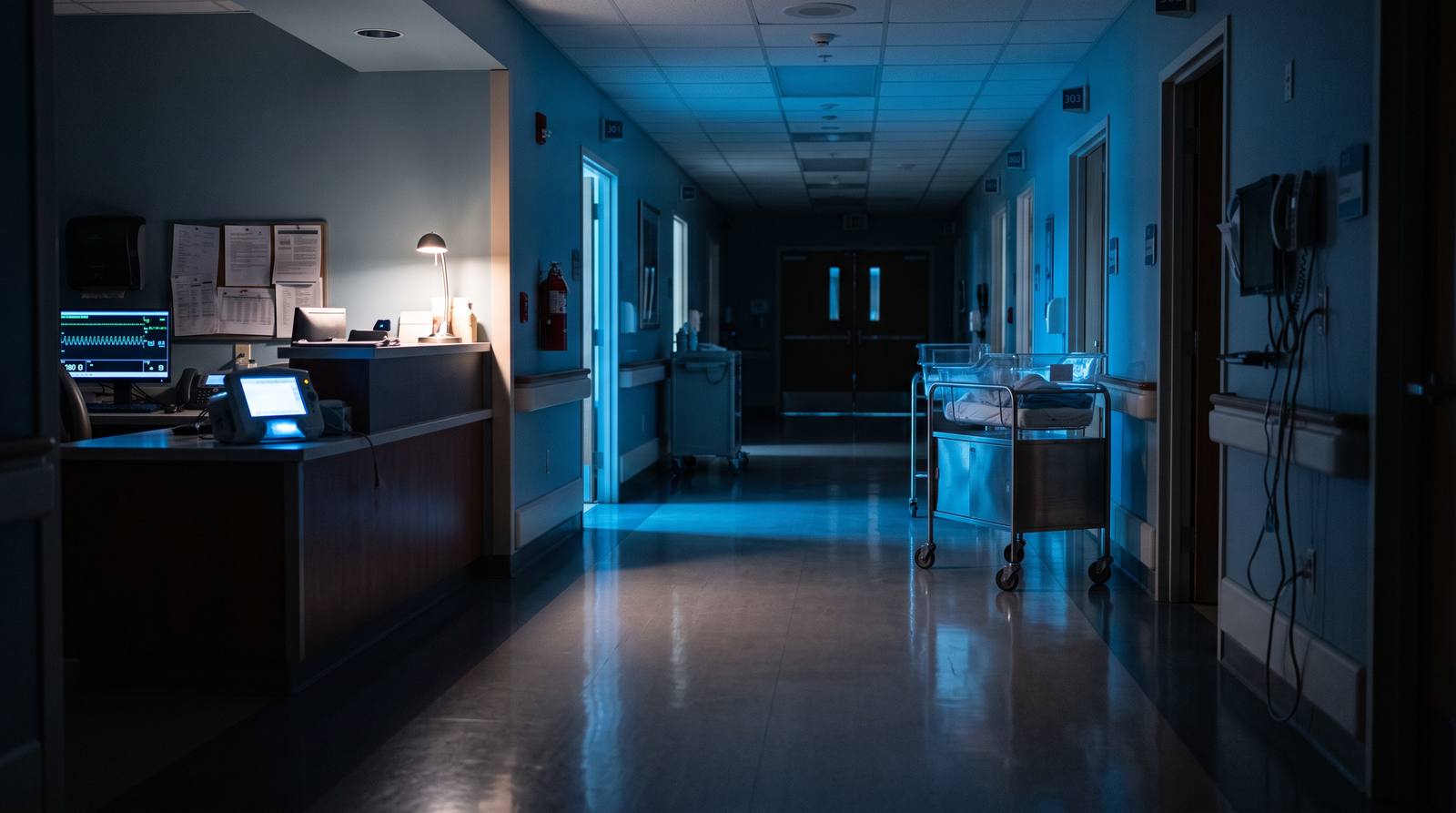

If your baby was born at Kaiser Permanente West Los Angeles Medical Center on Cadillac Avenue in Los Angeles, Los Angeles County, and the delivery was frightening or the weeks afterward have brought worries about your child's development, you are not alone in looking for answers. This page is written for parents and caregivers who delivered at this hospital and want to understand what a birth injury is, what warning signs to watch for, and what choices a family has.
According to the hospital's 2024 report to the state (HCAI), the medical center cared for 1,625 newborns in its newborn nursery that year, and it reported 12 licensed intensive-care newborn (NICU) beds with 180 NICU discharges. The hospital is run by Kaiser Permanente, a nonprofit health system. Most families who deliver there are Kaiser Permanente members, and that matters for how a claim is handled, as explained below.
Nothing here says anything went wrong at this hospital. Most deliveries go well, and most babies who need extra care in a NICU do well too. We explain the general medical and legal landscape so that, if you have questions about your own child's birth, you know what to ask, which records to request and why timing matters. This is general information, not legal or medical advice for your family.
Was your baby hurt during delivery?
Tell us your name and phone. We call you back today, in English or Spanish, and the consultation is free.
Free consultation · English y Español · No fees or costs unless we win
At a glance: Kaiser Permanente West Los Angeles Medical Center
| Address | 6041 Cadillac Avenue, Los Angeles, CA 90034 |
| County | Los Angeles County |
| Health system / operator | Kaiser Permanente |
| Type of hospital | Kaiser Permanente hospital (private nonprofit) |
| Newborns in 2024 | 1,625 (report to the state, HCAI) |
| Licensed NICU beds | 12 |
| Main phone | (323) 857-2000 |
| Hospital website | healthy.kaiserpermanente.org/southern-california/health-wellness/maternity/find-hospital/west-los-angeles |
Sources: HCAI — 2024 Hospital Annual Utilization Report and the hospital’s own website.
Labor and delivery at Kaiser Permanente West Los Angeles Medical Center
The medical center's own website confirms that it offers labor and delivery at 6041 Cadillac Avenue. The site describes a labor and delivery department on the fourth floor of the West Tower. Patients are first monitored in a private labor observation room and, once active labor is confirmed, move to a private labor room. The hospital also lists a delivery advice nurse, available around the clock, for members who are unsure whether to come in.
The hospital's maternity pages list a neonatal intensive care unit (NICU) among its services, and describe it as a place for babies who are born sick or early and need specialized care. The hospital's website does not state a NICU level, so we do not assign one. In its 2024 report to the state (HCAI), the hospital reported 12 licensed NICU beds and 180 NICU discharges, along with 1,625 newborns cared for in the newborn nursery.
The hospital serves families from West Los Angeles and surrounding communities in Los Angeles County. Many are Kaiser Permanente members who also receive prenatal care through the Kaiser system. If you had any visit, test or conversation during pregnancy or delivery that you would like to understand better, the medical record is the place to start, and we explain how to request it below.
Birth injuries families ask about after a difficult delivery
Hypoxic-ischemic encephalopathy (HIE) is brain injury caused by too little oxygen or blood flow around the time of birth. Medical sources describe cooling treatment (therapeutic hypothermia) as a standard treatment for moderate to severe HIE in full-term babies, started within the first hours of life. Cerebral palsy is a group of movement and posture conditions. The CDC reports that most cerebral palsy is congenital, meaning it is linked to events before or during birth, and the NICHD explains that its causes are often not fully known and can include prematurity, infections in pregnancy, and problems with brain development.
Erb's palsy and other brachial plexus injuries involve the nerves running from the neck to the arm. The National Institute of Neurological Disorders and Stroke explains that these can happen when a baby's shoulders are stretched during a hard delivery, and that many babies recover with time and therapy, while some need further treatment. Other injuries families ask about include bleeding in the newborn brain, a fractured collarbone or skull, and newborn infections such as group B strep, which the CDC says can cause sepsis, pneumonia or meningitis in the first days or weeks of life.
Mothers can be hurt too. Heavy bleeding after birth (postpartum hemorrhage), tears, infection and complications of cesarean surgery can affect a mother's recovery. Having a complication does not by itself mean that anyone made a mistake; many are known risks that can happen even with excellent care. An independent review of the records is how a family learns the difference.

Warning signs of a birth injury in the first days, weeks and months
In the first days, parents may notice a baby who is very limp or very stiff, has trouble feeding or swallowing, has a weak or unusual cry, has seizures or jerking movements, breathes with difficulty, or does not move one arm. A baby who needs a NICU stay, cooling treatment or an early brain scan is telling the care team something important. Ask for a plain-language explanation of why, and write down what you are told.
In the following weeks and months, watch for missed milestones: not following faces or sounds, not holding the head up, not rolling over, keeping the hands in fists, favoring one side of the body, unusual stiffness or floppiness, or feeding problems that continue. The CDC offers free developmental milestone checklists for parents. Delays do not always mean a birth injury, but they are a reason to talk with your pediatrician quickly.
If you are worried, you do not have to wait for a diagnosis. Early therapy often helps, and you can ask your pediatrician for a referral at any time. Keep notes on what you see, with dates, because they help doctors and, if you later seek legal advice, they help reviewers understand the timeline.
Free birth-injury case review
We review the delivery records with medical experts and tell you honestly whether there is a case. You pay no fees or costs unless we win.
Who may be responsible in a birth-injury claim
Many people take part in a delivery: labor and delivery nurses, the obstetrician, midwives, anesthesia providers, neonatologists and pediatricians, and the staff who read fetal heart monitoring. In a birth-injury claim, a reviewer looks at what each person did, when, and whether it met the accepted standard of care. Whether anyone may be responsible depends on the facts, and many bad outcomes happen without any error at all.
Who employs each provider can matter. Nurses and staff are often employees of the hospital or health system, while some physicians work for a separate medical group or as independent practitioners. At Kaiser Permanente, care is often delivered through a medical group that works with the health plan and hospital. Sorting out who was responsible for which part of the care is one of the first things an attorney reviews, and a family does not need to figure it out alone.
California also has special rules for medical claims, including strict deadlines, a required advance notice before a lawsuit, limits on one kind of damages, and, for Kaiser members, binding arbitration instead of a court trial. This page adds verified legal summaries below. Because these rules are time-sensitive, it is safer to get advice early even if you are unsure a claim exists.
How an independent expert review of a delivery works
An independent review starts with the complete records of the mother and the baby. Reviewers look at the fetal heart monitoring strips, which show the baby's heart rate and the mother's contractions over time. They compare these with nursing notes, physician orders and the timeline of decisions during labor.
They also study the baby's Apgar scores at one and five minutes, umbilical cord blood gas results that show how much oxygen and acid were in the baby's blood, newborn exam notes, NICU records, lab results, and any head ultrasound or MRI. Together, these help doctors who specialize in obstetrics, neonatology and pediatric neurology explain what happened and whether a medical cause was likely.
The result of a review can be reassuring, or it can raise questions that deserve a formal claim. Either answer gives a family information. Many birth-injury law firms arrange this kind of review at the start without charging the family; ask about costs and fee arrangements before you decide.
What to do now after a difficult delivery: step by step
First, take care of your child's health. Follow up with your pediatrician and any specialists, and ask about early intervention services. Keep every discharge paper, appointment summary and bill. Write down your own memories of labor and delivery while they are fresh, including who you spoke with and what you were told, without naming anyone publicly on social media.
Second, request the records. A parent or guardian can ask for the mother's chart and the baby's chart, including the fetal monitoring strips, which may be stored separately from the main chart. Ask for both paper and electronic copies and keep proof of your request. We explain how to ask this hospital below.
Third, talk to a lawyer who handles birth injuries before time runs out. Speaking with an attorney does not commit you to a lawsuit. Fourth, remember that Kaiser members' claims usually go to binding arbitration, and that claims against public hospitals have a much shorter initial deadline, so do not assume you have years to decide.
Support for your child while a case is reviewed
A legal review should never delay care. Physical, occupational and speech therapy, feeding support, vision and hearing checks, and special equipment can begin as soon as a doctor recommends them. Many California children qualify for Medi-Cal, and children with certain conditions may qualify for California Children's Services (CCS), which covers specialized care for eligible conditions.
For babies and toddlers under 3, California's Early Start program offers free evaluation and services through regional centers. Families do not need a lawyer or a final diagnosis to ask. School districts also provide services from age 3.
None of these programs depends on a legal case, and no outcome of a case can be promised. They are there so your child can get help now.
Kaiser members: arbitration instead of a jury
Kaiser Permanente works differently from most hospitals. Kaiser’s own member materials explain that members agree to binding arbitration instead of a jury or court trial for certain matters, that a member who believes their care was negligent can ask for binding arbitration, and that the arbitrator’s decision is binding on both the member and Kaiser Permanente. These arbitrations are run by a neutral Office of the Independent Administrator (oia-kaiserarb.com), not by Kaiser. For a family who delivered at a Kaiser hospital as Kaiser members, that usually means a birth-injury claim is decided by an arbitrator rather than a jury — and the claim still has to be started on time, so it is important not to wait.
Deadlines for a birth-injury claim in California
California gives a child’s birth-injury case its own deadline. Under Code of Civil Procedure § 340.5, a minor must sue within three years of the wrongful act, but a child who was under six when it happened has until his or her eighth birthday if that is longer. For a baby hurt during labor or delivery, that usually means the eighth birthday. The clock runs from the act itself, not from the day the family learned what went wrong, and it is paused only in narrow cases of fraud or collusion. Parents’ own claims, and claims against a public hospital, can have much shorter deadlines, so it is safer to get advice early.
California’s MICRA law limits one part of a medical malpractice recovery. Under Civil Code § 3333.2, as amended by AB 35, non-economic damages (pain, suffering, loss of enjoyment of life) are capped. In 2026 the cap is $470,000 for injury and $650,000 for wrongful death, and it rises every January 1 ($40,000 and $50,000 a year until 2033, then 2% a year). Separate caps can apply to doctors, hospitals and unaffiliated providers. Economic damages are not capped: lifetime medical care, therapy, equipment, home modifications and lost earning capacity can be recovered in full, and in a birth-injury case they are usually the largest part of the claim.
How to get the delivery records from Kaiser Permanente Medical Center
California law gives families a right to these records. Under Health and Safety Code § 123110, a patient or the patient’s personal representative — for a baby, a parent or guardian (§ 123105) — may inspect the records within five working days of a written request and is entitled to a paper or electronic copy, which the provider must send within 15 days after receiving a request that says which records are wanted. For a birth-injury review, ask for both charts: the mother’s labor and delivery record, including the fetal heart rate monitoring strips, and the baby’s newborn and NICU record.
Kaiser Permanente handles medical record requests through its Health Information Management and Release of Information functions, and its official medical records page (healthy.kaiserpermanente.org/southern-california/medical-records) explains how to request records, forms and certifications. For a baby's birth, ask for both the mother's labor and delivery chart and the baby's chart, including the fetal heart monitoring strips, cord blood gas results, newborn nursery and NICU notes, and any imaging. Parents or guardians may also call the hospital's main number, (323) 857-2000, and ask for the medical records department that serves 6041 Cadillac Avenue. Put the request in writing and keep a copy.
The hospital’s medical records page →
Where a case from Los Angeles would be filed
In Los Angeles County, civil cases for larger claims, called unlimited civil cases, are usually filed with the Superior Court of California, County of Los Angeles, in the Stanley Mosk Courthouse, 111 North Hill Street, Los Angeles, CA 90012. Because Kaiser Permanente members usually agree to binding arbitration, a birth-injury claim by a Kaiser member typically goes to an arbitrator rather than to a court, though the claim still has to be started on time and the court may still play a limited role. An attorney can tell you which path applies to your family.
Superior Court of California, County of Los Angeles – Stanley Mosk Courthouse → — 111 North Hill Street, Los Angeles, CA 90012
Help for your child now: Early Start in Los Angeles County
Early Start is California's free early intervention program for babies and toddlers under 3 with developmental delays or conditions that may cause them. According to the Department of Developmental Services (dds.ca.gov), Westside Regional Center serves the Santa Monica-West and Inglewood health districts of Los Angeles County; you can confirm which regional center serves your home address with the DDS regional center lookup. To ask for an evaluation, call the regional center's Early Start intake line (Westside lists (310) 258-4096), say you are concerned about your baby's development, and ask for an evaluation. You do not need a lawyer, a diagnosis or a doctor's referral to ask.
Key facts
- According to the hospital's 2024 report to the state (HCAI), Kaiser Permanente West Los Angeles Medical Center cared for 1,625 newborns in its nursery and reported 12 licensed NICU beds.
- The hospital's own website confirms that labor and delivery is offered at 6041 Cadillac Avenue in Los Angeles.
- Kaiser Permanente is a private nonprofit health system, not a county or University of California hospital.
- Kaiser members' claims are usually decided by an arbitrator instead of a jury, and strict deadlines still apply.
- You can ask for your baby's records, including fetal monitoring strips, and for a free Early Start evaluation without a lawyer.
Questions parents ask
Can I file a birth-injury claim against Kaiser Permanente West Los Angeles Medical Center?
A family may bring a claim if an independent review of the records suggests that care fell below accepted standards and caused the injury. Many birth complications happen without any error, so the review comes first. For Kaiser members the claim usually goes to binding arbitration rather than a jury trial.
How long do I have to file a birth-injury claim?
California gives a child's birth-injury case its own deadline, which for a baby hurt during labor or delivery usually runs to the child's eighth birthday. Parents' own claims can have much shorter deadlines, so it is safer to get advice early rather than wait.
Is Kaiser Permanente West Los Angeles Medical Center a public hospital?
No. The state classifies it as a private nonprofit hospital operated by Kaiser Permanente, not a county or University of California hospital. The six-month government claim rule for public hospitals therefore does not usually apply, but a lawyer can confirm how it applies to your case.
What if my doctor did not work for the hospital?
That does not end the question. Some physicians work for a medical group or on their own, and nurses and staff may work for the hospital or health system. A review of the records helps show who was involved in each part of your care, and each may have different rules.
How do I get my fetal monitoring strips from Kaiser Permanente West Los Angeles Medical Center?
Ask in writing for the mother's labor and delivery chart and the baby's chart, and name the fetal heart monitoring strips specifically, since they may be stored apart from the main chart. California law gives parents a right to inspect and copy these records. Kaiser's medical records page explains how to submit a request.
Does it cost anything to talk to a lawyer?
Many birth-injury firms offer a free first conversation about your child's birth and your options, and talking does not commit you to a claim. Ask any firm how it is paid before you sign anything.
Ask a question
Not ready to call? Write your question and a member of our team answers you — no cost, no commitment.
Other Los Angeles County hospitals we cover
Cedars-Sinai Medical Center · Miller Children’s & Women’s Long Beach · Pomona Valley Hospital Medical Center · Kaiser Permanente Downey · Antelope Valley Medical Center · Adventist Health White Memorial · Kaiser Permanente Baldwin Park · Queen of the Valley Hospital, West Covina · CHA Hollywood Presbyterian · Huntington Hospital, Pasadena · Los Angeles birth injury lawyers →
Kaiser Permanente West Los Angeles Medical Center Birth Injury Lawyers — Beverly Law
Free case review for families in Los Angeles. We obtain the delivery records, have them reviewed by medical experts and deal with the hospital and its insurer — you focus on your child. You pay no fees or costs unless we win.
Related pages
Cerebral Palsy · Erb’s Palsy / Brachial Plexus Injury · HIE / Oxygen Deprivation at Birth · Statute of Limitations · MICRA Damages Cap · All California hospitals · California birth injury lawyers · Birth injury guides
Sources
- HCAI — 2024 Hospital Annual Utilization Report (final, October 2025)
- Kaiser Permanente – West Los Angeles Medical Center maternity — Hospital address, labor and delivery and NICU listed among services
- Kaiser Permanente – Delivery Day, West Los Angeles — Labor and delivery unit, private labor rooms, delivery advice nurse
- Kaiser Permanente – Medical records — How to request records through Health Information Management and Release of Information
- HCAI – Hospital Annual Utilization Report 2024 — Newborn nursery count, licensed NICU beds and NICU discharges
- Superior Court of Los Angeles County – Stanley Mosk Courthouse — Courthouse address for unlimited civil cases
- California Department of Developmental Services – Regional Center Listings — Westside Regional Center health districts and regional center lookup
- CDC – Risk Factors for Cerebral Palsy — Cerebral palsy is mostly congenital; known risk factors
- NICHD – What causes cerebral palsy? — Causes of cerebral palsy
- CDC – Clinical Overview of Group B Strep Disease — Newborn GBS infection, sepsis, pneumonia, meningitis
- NINDS – Brachial Plexus Injuries — Erb's palsy and brachial plexus injuries
- Code of Civil Procedure § 340.5
- Civil Code § 3333.2 (as amended by AB 35, 2022)
- Health and Safety Code § 123110 (patient access to records)
- Kaiser Permanente — Member resource guide, California (binding arbitration, Office of the Independent Administrator)
Beverly Law is an independent law firm. We are not affiliated with, endorsed by or speaking for Kaiser Permanente West Los Angeles Medical Center or Kaiser Permanente. Hospital facts on this page come from the public sources listed above.
Important: This page is general information about birth injuries and California law, not legal advice, and reading it does not create an attorney-client relationship with Beverly Law. Every case is different — talk to a lawyer about your own situation. Attorney advertising. Prior results do not guarantee a similar outcome. No fees or costs unless we win. Last reviewed: 2026-09-18.