
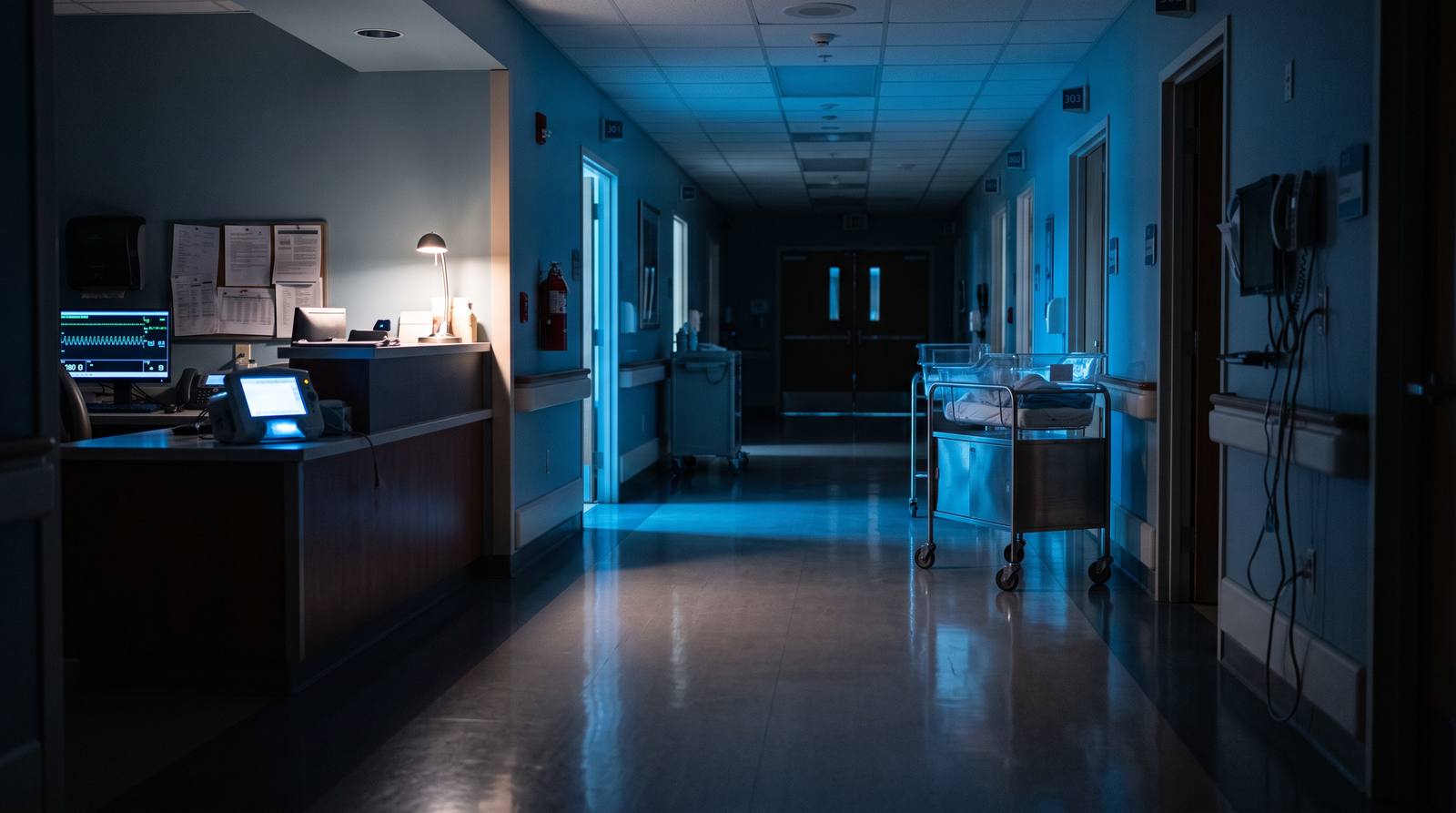

Preeclampsia is a pregnancy condition in which a mother's blood pressure rises and other organs, such as the liver or kidneys, may be affected. The National Institute of Child Health and Human Development (NICHD) estimates that it affects about 3.4% of pregnancies in the United States. Most women who have it do well when it is noticed early and watched closely.
HELLP syndrome is a serious form of the same problem that involves the blood and the liver. Because these conditions can change quickly, families often ask a fair question: what should a care team do when the warning signs appear? This guide explains, in plain words, what public health and medical sources say about blood pressure numbers, treatment, delivery timing, the weeks after birth, and maternal death data in California, Texas and Washington.
Was your baby hurt during delivery?
Tell us your name and phone. We call you back today, in English or Spanish, and the consultation is free.
Free consultation · English y Español · No fee unless we win
What preeclampsia and HELLP are
MedlinePlus, from the National Library of Medicine, describes preeclampsia as high blood pressure and signs of liver or kidney damage that occur after the 20th week of pregnancy. NICHD adds that it can reduce the oxygen and nutrients that reach the baby, and that it can raise the risk of preterm birth and stroke for the mother.
HELLP is named for three findings on blood tests: hemolysis (breakdown of red blood cells), elevated liver enzymes and a low platelet count. It is generally treated as a severe form of preeclampsia, which is why blood tests are part of the work-up when a mother has warning signs.
Blood pressure numbers and warning signs
According to MedlinePlus, diagnosis usually involves a reading of 140/90 mm Hg or higher. It describes the condition as more severe when the lower number goes above 110, or stays above 100 over 24 hours. NICHD notes that providers check blood pressure at every prenatal visit, and that if readings are high after 20 weeks, more testing follows to confirm the diagnosis.
Symptoms may include swelling of the face and hands, sudden weight gain, a bad headache, vision changes and pain in the right side of the belly under the ribs. The CDC's Hear Her campaign lists urgent warning signs for anyone who is pregnant or up to one year after pregnancy, including a severe headache, vision changes, extreme swelling of the hands or face, shortness of breath, and severe belly pain that does not go away.
Not every mother has symptoms, so a high reading, a new symptom or a call from a worried patient is a reason for the team to look further. The CDC also says that if you feel something is not right, or you are unsure whether it is serious, you should talk to your health care provider.

Treatment and the timing of delivery
NICHD says the main treatments are delivery of the baby and medicines. MedlinePlus says medicines are used to control blood pressure and to prevent seizures. Hospitals commonly use magnesium sulfate for seizure prevention in severe cases, and the decision about who needs it belongs to the treating doctors.
On timing, MedlinePlus explains that at 37 weeks a baby is usually developed enough to be born healthy. If severe preeclampsia develops, earlier delivery may be needed, especially when blood pressure reaches critical levels or organ damage appears. Boston Medical Center similarly notes that when blood pressure rises near term, delivery may be recommended, by induction or cesarean depending on the situation.
Every pregnancy is different, so there is no single rule that fits all. Doctors weigh the mother's health, the baby's age and test results together.
The weeks after birth
Preeclampsia does not always end at delivery. MedlinePlus says signs usually resolve within about six weeks, and that the risk continues for up to six weeks after birth. Boston Medical Center points out that blood pressure can also be normal during pregnancy and rise after delivery, which can be dangerous if not treated.
The CDC's Hear Her campaign lists urgent warning signs through the first year after pregnancy. For that reason, many hospitals give new mothers clear instructions about which symptoms mean they should call or return, and some families are also asked to check blood pressure at home. If you leave the hospital and develop a severe headache, vision changes or chest pain, seek care right away.
Maternal death data in Texas and Washington, and California's review
Texas: the Texas Maternal Mortality and Morbidity Review Committee, in its joint report with the Department of State Health Services, reviewed 2020. It counted 85 pregnancy-related deaths and a pregnancy-related mortality ratio of 23.1 per 100,000 live births, and found that 80% of those deaths had at least some chance of being prevented. The same program reports that severe maternal morbidity involving preeclampsia rose 37% between 2017 and 2020, and that Texas started a statewide Severe Hypertension in Pregnancy initiative with hospitals in December 2020.
Washington: the Department of Health's Maternal Mortality Review Panel works under RCW 70.54.450 and reviews deaths during pregnancy or within a year after. It reports pregnancy-related mortality of 33.4 per 100,000 live births in 2021 and 27.6 in 2022, and found that 82% of pregnancy-related deaths were preventable. Most of those deaths were not from preeclampsia; the leading causes were behavioral health conditions. Washington started its Blue Band Initiative in September 2023 to improve early detection of preeclampsia and postpartum hypertension.
California: the California Department of Public Health runs a Pregnancy-Associated Mortality Review. We could not open the state's current data pages to verify specific numbers, so we do not quote any here. You can find California's figures on the CDPH maternal health pages. Note that these numbers are statewide counts; they do not describe any individual hospital or family.
Key facts
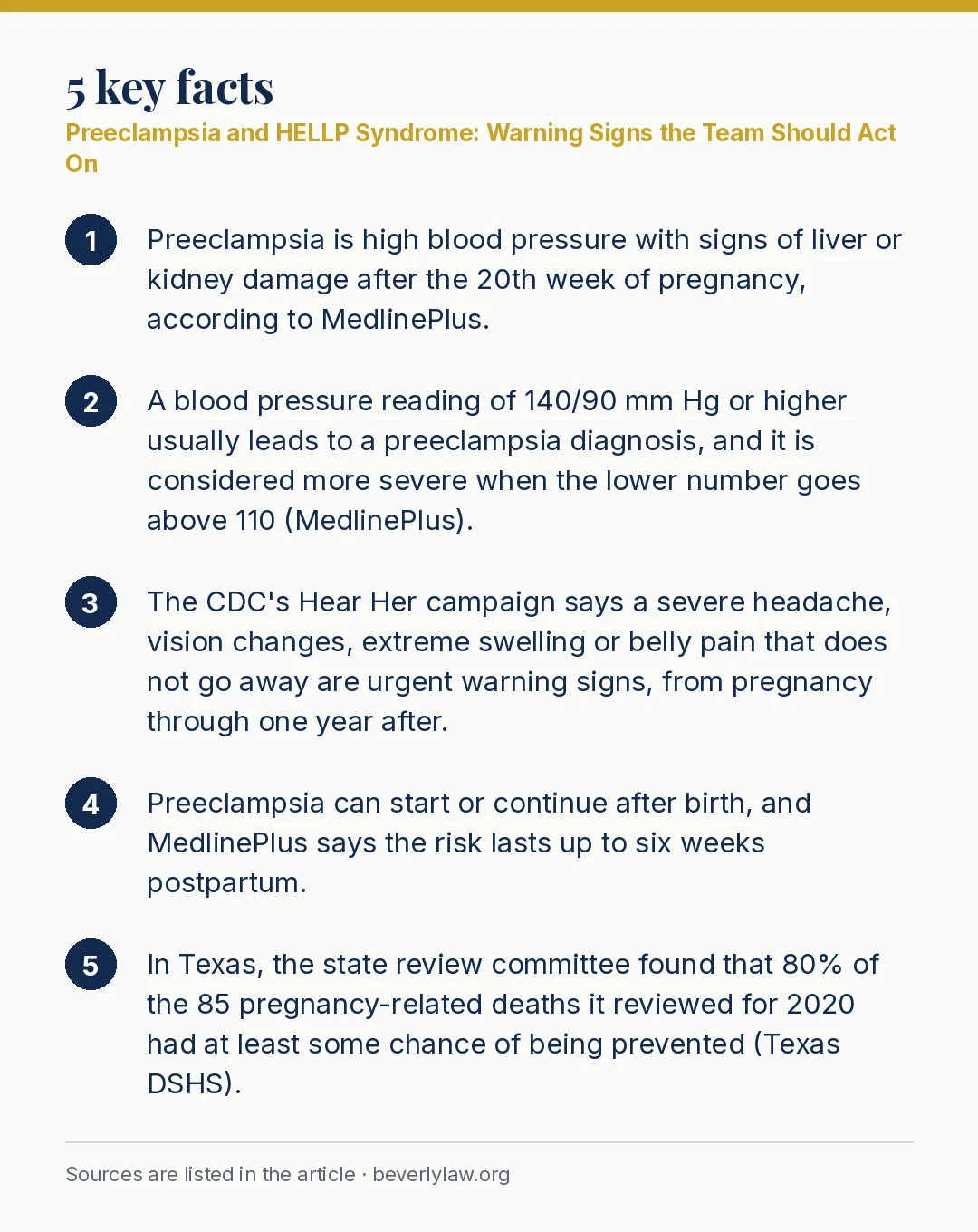
Read the key facts as text
- Preeclampsia is high blood pressure with signs of liver or kidney damage after the 20th week of pregnancy, according to MedlinePlus.
- A blood pressure reading of 140/90 mm Hg or higher usually leads to a preeclampsia diagnosis, and it is considered more severe when the lower number goes above 110 (MedlinePlus).
- The CDC's Hear Her campaign says a severe headache, vision changes, extreme swelling or belly pain that does not go away are urgent warning signs, from pregnancy through one year after.
- Preeclampsia can start or continue after birth, and MedlinePlus says the risk lasts up to six weeks postpartum.
- In Texas, the state review committee found that 80% of the 85 pregnancy-related deaths it reviewed for 2020 had at least some chance of being prevented (Texas DSHS).
Free birth-injury case review
We review the delivery records with medical experts and tell you honestly whether there is a case. You pay nothing unless we win.
Questions parents ask
Can preeclampsia happen after I go home from the hospital?
Yes. According to MedlinePlus, the risk continues for up to six weeks after delivery, and the CDC lists urgent warning signs through the first year after pregnancy. If you have a severe headache, vision changes, chest pain or trouble breathing, seek care right away.
What blood pressure number is a concern in pregnancy?
MedlinePlus says a reading of 140/90 mm Hg or higher is typically used for diagnosis, and a lower number above 110 points to a more severe condition. One high reading does not by itself confirm preeclampsia, which is why providers usually repeat the reading and order tests.
Is an early delivery always needed?
No. MedlinePlus says 37 weeks is when a baby is usually ready to be born, and earlier delivery may be needed if severe preeclampsia develops. The timing depends on the mother’s and baby’s condition, and the care team decides it case by case.
Sources
CDC Hear Her: Urgent Maternal Warning Signs
NICHD: Preeclampsia and Eclampsia
MedlinePlus (NIH/National Library of Medicine): Preeclampsia
Texas DSHS: Maternal Mortality and Morbidity Review Committee Joint Biennial Report 2024
Washington State Department of Health: Maternal Mortality Review Panel
Boston Medical Center: High Blood Pressure and Preeclampsia
Preeclampsia and HELLP are treatable when high blood pressure and warning signs are noticed and followed up, during pregnancy and in the weeks after birth. If you or someone you love had a high reading, a severe headache or a delivery that raises questions, you are allowed to ask what happened. This article is general information, not legal or medical advice, and it cannot say whether anyone's care met the standard. For medical concerns, call your doctor or seek emergency care. If you would like to talk it through, Beverly Law invites you to request a free case review, with no promises about any outcome.
Ask a question
Not ready to call? Write your question and a member of our team answers you — no cost, no commitment.
Preeclampsia and HELLP Syndrome: Warning Signs the Team Should Act On — Beverly Law
Free case review for families in California, Texas and Washington. We obtain the delivery records, have them reviewed by medical experts and deal with the hospital and its insurer — you focus on your child. You pay nothing unless we win.
Related pages
Cerebral Palsy · Erb’s Palsy / Brachial Plexus Injury · HIE / Oxygen Deprivation at Birth · Statute of Limitations · All birth-injury guides · Birth injury news
Important: This page is general information about birth injuries and California law, not legal advice, and reading it does not create an attorney-client relationship with Beverly Law. Every case is different — talk to a lawyer about your own situation. Attorney advertising. Prior results do not guarantee a similar outcome. No fee unless we win. Last reviewed: 2026-09-18.