
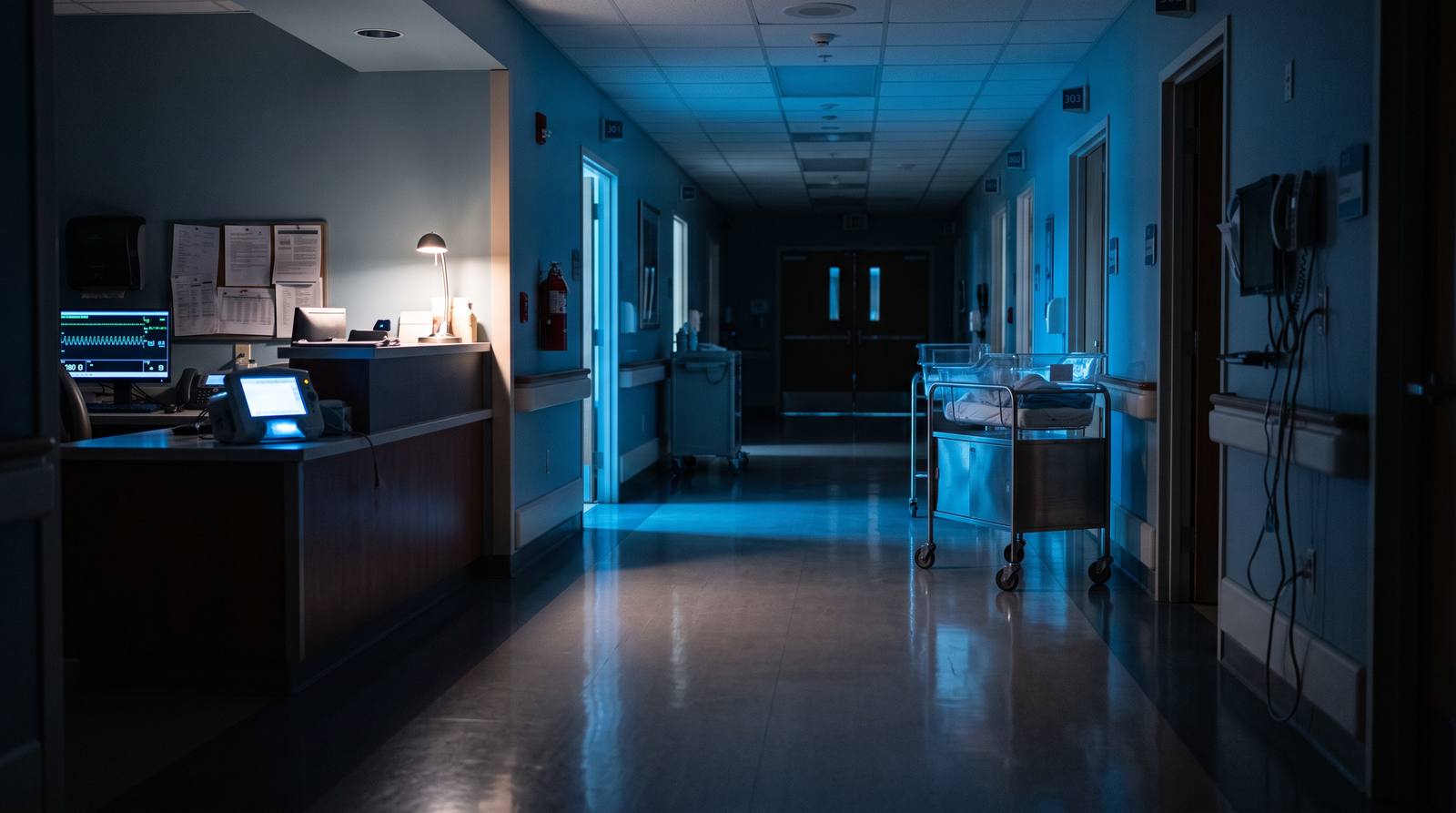

Santa Barbara Cottage Hospital is located at 400 W. Pueblo Street in Santa Barbara, in Santa Barbara County, California. It is a private nonprofit hospital operated by Cottage Health, and it is where many families on the South Coast welcome their babies. According to the hospital's 2024 report to the state (HCAI), its newborn nursery cared for 1,682 newborns that year, and the hospital is licensed for 22 intensive-care newborn (NICU) beds, with 206 NICU discharges in 2024.
This page is for parents and family members who delivered at Santa Barbara Cottage Hospital and now have questions. Perhaps the delivery was difficult, your baby needed extra care in the NICU, or your child has since been diagnosed with a condition such as cerebral palsy, a brachial plexus (arm nerve) injury or a brain injury from lack of oxygen. You may simply want to understand what happened and what your options are. We explain birth injuries in plain words, what to watch for, how records and independent medical reviews work, and what help is available in Santa Barbara County.
Most births go well, and nothing on this page says that anything went wrong at this hospital or with any person who cared for you. The information is general and educational. It is not legal or medical advice, and every family's situation is different. If you have concerns, the best first steps are to gather your records, talk to your child's doctors, and ask a lawyer who handles birth-injury cases to explain your rights before any deadline passes.
Was your baby hurt during delivery?
Tell us your name and phone. We call you back today, in English or Spanish, and the consultation is free.
Free consultation · English y Español · No fees or costs unless we win
At a glance: Santa Barbara Cottage Hospital
| Address | 400 W. Pueblo Street, Santa Barbara, CA 93105 |
| County | Santa Barbara County |
| Health system / operator | Cottage Health |
| Type of hospital | Private nonprofit hospital |
| Newborns in 2024 | 1,682 (report to the state, HCAI) |
| Licensed NICU beds | 22 |
| NICU level | Level III |
| Main phone | (805) 682-7111 |
| Hospital website | cottagehealth.org |
Sources: HCAI — 2024 Hospital Annual Utilization Report and the hospital’s own website.
Labor and delivery at Santa Barbara Cottage Hospital
Santa Barbara Cottage Hospital offers labor and delivery through its Birth Center, part of the hospital's Women's Services. The hospital's own website describes a team of specialty-trained registered nurses who care for mothers through labor and birth, and it lists an antepartum unit for pregnancies that need closer monitoring, such as preterm labor or high blood pressure. The hospital's Ob/Gyn clinic page also describes a 24-hour obstetric hospitalist program, meaning a board-certified obstetrician is available for labor, delivery and emergencies. Families can ask the hospital directly how these services apply to their own care.
For babies who need more support, the hospital has a neonatal intensive care unit. The hospital describes its NICU as Level III, which is a designation for units that care for premature and critically ill newborns, and it is part of Cottage Children's Medical Center. According to the hospital's 2024 report to the state (HCAI), the hospital is licensed for 22 NICU beds and had 206 NICU discharges in 2024, in addition to the 1,682 newborns cared for in its newborn nursery that year.
The hospital sits at 400 W. Pueblo Street in Santa Barbara and serves families from the city and from across Santa Barbara County and the surrounding Central Coast. Families who delivered here come from many backgrounds, and many speak Spanish at home. You can reach the hospital at (805) 682-7111. If your questions are about a past delivery, the sections below explain the medical terms, the records you can request and the steps you can take.
Birth injuries families ask about after a difficult delivery
Hypoxic-ischemic encephalopathy, or HIE, is a brain injury caused by too little blood flow and oxygen reaching the baby's brain. The Cleveland Clinic explains that it mostly affects newborns after a difficult birth and is sometimes called birth asphyxia. Causes can include problems with the umbilical cord, the placenta or the uterus, as well as conditions in the pregnancy itself such as infections or high blood pressure. Babies with moderate or severe HIE are often treated with therapeutic hypothermia, or body cooling, which is generally started within the first hours of life. The outlook depends on how severe the injury is.
Cerebral palsy is a group of conditions that affect movement, balance and posture. The CDC reports that most cases are congenital, meaning the brain was affected before or during birth, and that in many children the specific cause is never identified. A lack of oxygen around the time of birth accounts for only a small share of cases. Cerebral palsy is usually diagnosed over the first months or years, as doctors watch a child's movements and milestones.
Erb's palsy, also called brachial plexus palsy, is weakness of the arm caused by stretching of the nerves that run from the neck to the shoulder. Medical reviews link it to factors such as a large baby, shoulder dystocia (when the shoulder is stuck during delivery), breech position or a long pushing stage, and many babies recover with therapy. Other injuries families ask about include bleeding in or around the brain, a broken collarbone or skull fracture, and infections such as group B strep. The CDC explains that most babies who develop GBS disease in the first week were infected from the mother during delivery, which is why pregnant women are screened and some receive antibiotics in labor.
Mothers can be injured too. Heavy bleeding after delivery (hemorrhage), tears, infection and complications of a cesarean birth are among the maternal problems families sometimes ask about. These are general medical facts. Having one of these conditions does not by itself mean that anyone made a mistake, which is why a careful review of the actual records matters.

Warning signs in the first days, weeks and months
In the first hours and days, signs that a newborn may have had a problem with oxygen or blood flow include a very floppy or very stiff body, trouble feeding, unusual sleepiness, a weak cry, irritability, pale, blue or gray skin, trouble breathing and seizures. Seizures in a newborn can be subtle, such as repeated lip smacking, eye movements, bicycling legs or brief pauses in breathing. If you see any of these, tell the nurses or call for emergency help right away.
In the first weeks, watch for an arm that stays still or hangs limp at the baby's side, a baby who does not move one arm like the other, a baby who cries when you move a shoulder or collarbone, a swollen or soft spot on the head, fever or a low temperature, poor feeding, or breathing that seems fast or labored. Infections in newborns, including GBS, can progress quickly, and doctors stress that treatment should begin as soon as possible.
Over the following months, the CDC lists early signs of cerebral palsy. Before six months these include head lag when the baby is lifted, stiffness or floppiness, an arched back and neck, and stiff legs that cross. After six months they include not rolling over in either direction, difficulty bringing the hands together or to the mouth, and reaching with only one hand. Late or missing milestones such as sitting, crawling or walking are another sign. Some children without cerebral palsy show these signs, so a developmental evaluation is needed. The CDC advises parents who are worried to contact their state's early intervention program without waiting for a referral. Trust your instincts and write down what you notice and when.
Free birth-injury case review
We review the delivery records with medical experts and tell you honestly whether there is a case. You pay no fees or costs unless we win.
Who may be responsible in a birth-injury claim
Many people take part in a delivery, and who may be legally responsible depends on the facts. A hospital may be responsible for the actions of its employees, such as labor and delivery nurses, NICU nurses and staff, and sometimes for the way the unit is organized and staffed. Other people involved may include the obstetrician, a midwife, an anesthesiologist, a neonatologist or pediatrician, and the medical group that employs or contracts with them.
An important question is who employed the person in question. Some physicians are employees of the hospital or a health system. Others are independent doctors or belong to separate medical groups that have privileges at the hospital. If your own obstetrician was in private practice and did not work for the hospital, the claim may involve that doctor and that practice rather than, or in addition to, the hospital. An experienced lawyer will look at who was on duty, who made each decision and who employed them.
How an independent expert review of a delivery works
A review starts with the complete records for both mother and baby. Key documents include the prenatal chart, the labor and delivery notes, the fetal heart monitoring strips, the anesthesia record, the operative or delivery report, the baby's Apgar scores, umbilical cord blood gas results, and the NICU notes, imaging and lab results. Fetal heart monitoring strips show the baby's heart rate and the mother's contractions over time, and specialists read them for patterns that call for action.
Independent medical experts, usually a board-certified obstetrician, often a neonatologist, and sometimes a pediatric neurologist or radiologist, then read the records. They look at the timeline, such as when concerns appeared, who was told, what was done and how long it took. They also review brain imaging such as MRI, which can help show the timing and pattern of an injury. Cord blood gases and Apgar scores are pieces of the puzzle, but doctors look at them together with the full record, because no single number tells the whole story.
The expert's role is to give an honest medical opinion on whether the care met accepted standards and whether any departure caused the child's condition. Sometimes the answer is that the injury could not have been prevented. A good lawyer will tell you that as well. Because California requires written notice before a medical malpractice lawsuit is filed, this review is often done early, so the family understands its options with time to spare.
What to do now: step by step for families
First, take care of your child and yourself. Keep up with pediatric, specialist and therapy appointments, and ask the doctors to explain the diagnosis in plain words. If you prefer Spanish, you may ask for an interpreter. Write down a timeline of the pregnancy, labor, delivery and the first days and weeks while your memory is fresh, including the names on any wristbands or paperwork, but there is no need to guess about anything you do not know.
Second, request the records. You can ask Santa Barbara Cottage Hospital for the full mother's chart and the baby's chart, including the fetal monitoring strips and the NICU records, and you should also ask your obstetrician's office and your child's pediatrician for their files. Keep copies of bills, insurance letters and Medi-Cal or other paperwork, and keep a folder of photographs, videos and test results.
Third, speak with a birth-injury lawyer early. California has strict deadlines, and they can be different for the child, for the parents and for public hospitals. A lawyer can explain which deadlines apply to your situation and can arrange an independent medical review. A first conversation costs nothing, and you are not obligated to file anything. Finally, avoid signing releases or giving recorded statements to an insurance company before you have received advice, and ask questions until you understand your options.
Support while a case is reviewed: therapies, Early Start, Medi-Cal and CCS
Your child's care should not wait for any legal review. Early therapies, such as physical, occupational and speech therapy, can make a real difference, and children under 3 may qualify for Early Start, California's early intervention program, which you can reach through Tri-Counties Regional Center in Santa Barbara County. The CDC advises families to contact early intervention if they are concerned about development, without waiting for a doctor's referral.
Medi-Cal may help cover medical care for eligible children. California Children's Services (CCS), a state program run with county health departments, helps children with certain serious medical conditions get specialty care, and NICU graduates are sometimes eligible. Eligibility rules apply, and a hospital social worker, your child's doctor or the county CCS office can tell you whether your child qualifies. We cannot promise any particular benefit.
Deadlines for a birth-injury case in California
California gives a child’s birth-injury case its own deadline. Under Code of Civil Procedure § 340.5, a minor must sue within three years of the wrongful act, but a child who was under six when it happened has until his or her eighth birthday if that is longer. For a baby hurt during labor or delivery, that usually means the eighth birthday. The clock runs from the act itself, not from the day the family learned what went wrong, and it is paused only in narrow cases of fraud or collusion. Parents’ own claims, and claims against a public hospital, can have much shorter deadlines, so it is safer to get advice early.
Before a medical malpractice lawsuit can be filed in California, the doctor or hospital must get written warning. Under Code of Civil Procedure § 364, the health care provider must receive at least 90 days’ notice of the intention to sue. No special form is required, but the notice must state the legal basis of the claim, the type of loss and the specific injuries suffered. Under § 364(d), if the notice is served within the last 90 days of the filing deadline, the deadline is extended 90 days from the date of service. The notice is a required step, and it is often the moment a case moves from questions to formal action.
What MICRA caps — and what it does not
California’s MICRA law limits one part of a medical malpractice recovery. Under Civil Code § 3333.2, as amended by AB 35, non-economic damages (pain, suffering, loss of enjoyment of life) are capped. In 2026 the cap is $470,000 for injury and $650,000 for wrongful death, and it rises every January 1 ($40,000 and $50,000 a year until 2033, then 2% a year). Separate caps can apply to doctors, hospitals and unaffiliated providers. Economic damages are not capped: lifetime medical care, therapy, equipment, home modifications and lost earning capacity can be recovered in full, and in a birth-injury case they are usually the largest part of the claim.
How to get the delivery records from Santa Barbara Cottage Hospital
California law gives families a right to these records. Under Health and Safety Code § 123110, a patient or the patient’s personal representative — for a baby, a parent or guardian (§ 123105) — may inspect the records within five working days of a written request and is entitled to a paper or electronic copy, which the provider must send within 15 days after receiving a request that says which records are wanted. For a birth-injury review, ask for both charts: the mother’s labor and delivery record, including the fetal heart rate monitoring strips, and the baby’s newborn and NICU record.
To ask Santa Barbara Cottage Hospital for your records, contact its Health Information Management (HIM) department. According to the hospital's website, you can complete a records authorization form online or download the form, fill in the dates of service you need, sign it and send it by mail, fax or email to medicalrecords@sbch.org; HIM's listed hours are Monday to Friday, 8 a.m. to 4:30 p.m. Cottage's MyChart patient portal may also give you access to some records. Ask for the complete chart for both the mother and the baby, including the fetal heart monitoring strips, the labor and delivery notes, the anesthesia record and all NICU records. Because phone numbers for the department have varied on the hospital's pages, you can also call the hospital's main number, (805) 682-7111, and ask to be connected to Health Information Management.
The hospital’s medical records page →
Where a case from Santa Barbara would be filed
A birth-injury case from Santa Barbara Cottage Hospital would usually be filed in the Superior Court of California, County of Santa Barbara. The court's Anacapa Division, at 1100 Anacapa Street in Santa Barbara (mailing address P.O. Box 21107, Santa Barbara, CA 93121-1107), lists civil cases among the matters it handles, and the court's clerk's office can be reached at (805) 882-4520. The right court can depend on where the care took place and where the defendants are located, and your lawyer will confirm the proper venue and the right division before anything is filed.
Superior Court of California, County of Santa Barbara, Anacapa Division → — 1100 Anacapa Street, P.O. Box 21107, Santa Barbara, CA 93121-1107
Help for your child now: Early Start in Santa Barbara County
Early Start is California's early intervention program for babies and toddlers under 3 who have a developmental delay or a condition that may cause one, and it is available through regional centers. In Santa Barbara County, the regional center is Tri-Counties Regional Center (tri-counties.org). To ask for an evaluation, call its Santa Barbara office at (805) 962-7881 or use the Apply for Services page on its website and choose that the person seeking services is under age 3. You do not need to wait for a doctor's referral or for any legal review, and you may ask for the evaluation to be done in Spanish.
Tri-Counties Regional Center →
Key facts
- Santa Barbara Cottage Hospital is a private nonprofit hospital at 400 W. Pueblo Street in Santa Barbara, operated by Cottage Health.
- According to the hospital's 2024 report to the state (HCAI), it cared for 1,682 newborns in its newborn nursery and has 22 licensed NICU beds, with 206 NICU discharges in 2024.
- The hospital describes its NICU as Level III, a designation for units that care for premature and critically ill newborns.
- California gives a child's birth-injury case its own deadline, but the parents' own claims can have shorter deadlines, so it is safer to get advice early.
- You have a legal right to request the mother's and the baby's medical records, including the fetal heart monitoring strips, from the hospital's Health Information Management department.
Questions parents ask
Can I file a birth-injury claim against Santa Barbara Cottage Hospital?
Families may bring a claim if a qualified medical review finds that the care fell below accepted standards and that this caused the child's injury. Many difficult deliveries have no one at fault, so the first step is a careful review of the records by independent experts. A lawyer who handles birth-injury cases can explain whether your situation merits that review.
How long do I have to file a birth-injury claim?
California gives a child's birth-injury case its own deadline, which is often longer than other medical cases, but the clock runs from the event itself, not from when you learned about a problem. The parents' own claims can have much shorter deadlines. Because the rules are strict and depend on the facts, it is safer to get advice early.
Is Santa Barbara Cottage Hospital a public hospital?
According to the state's data, Santa Barbara Cottage Hospital is operated as a non-profit corporation, not as a county or University of California hospital. The six-month claim rule that applies to public hospitals therefore is not the starting point for most families here, but a lawyer will confirm who the proper parties are in your case.
What if my doctor did not work for the hospital?
Many obstetricians and other physicians are independent or belong to separate medical groups, rather than being hospital employees. If so, a claim may involve that doctor and the medical group, and may or may not involve the hospital, depending on who was responsible for each part of your care. A records review will show who was involved.
How do I get my fetal monitoring strips from Santa Barbara Cottage Hospital?
Send a signed records authorization to the hospital's Health Information Management department, using the form on the hospital's website or by calling (805) 682-7111 for help. Ask specifically for the fetal heart monitoring strips along with the full labor and delivery chart for the mother and the complete NICU chart for the baby.
Does it cost anything to talk to a lawyer?
A first conversation about a possible birth-injury case is free and creates no obligation. Many birth-injury lawyers handle these cases on a contingency basis, meaning no attorney fee unless there is a recovery, but you should ask any lawyer to explain the fee agreement and any costs in writing before you sign.
Ask a question
Not ready to call? Write your question and a member of our team answers you — no cost, no commitment.
Other Santa Barbara County hospitals we cover
Marian Regional Medical Center
Santa Barbara Cottage Hospital Birth Injury Lawyers — Beverly Law
Free case review for families in Santa Barbara. We obtain the delivery records, have them reviewed by medical experts and deal with the hospital and its insurer — you focus on your child. You pay no fees or costs unless we win.
Related pages
Cerebral Palsy · Erb’s Palsy / Brachial Plexus Injury · HIE / Oxygen Deprivation at Birth · Statute of Limitations · MICRA Damages Cap · All California hospitals · California birth injury lawyers · Birth injury guides
Sources
- HCAI — 2024 Hospital Annual Utilization Report (final, October 2025)
- Cottage Health: Women's Services and Birth Center — Labor and delivery, Birth Center and antepartum unit at Santa Barbara Cottage Hospital
- Cottage Health: Obstetrics & Gynecology Clinic — 24-hour obstetric hospitalist program
- Cottage Health newsroom: first baby of 2026 — Confirms labor and delivery is active in 2026 and the hospital's Level III NICU
- Cottage Health: Requesting Your Medical Records — Health Information Management records request process
- Santa Barbara Superior Court: Anacapa Division — Courthouse address and civil case filings
- Tri-Counties Regional Center — Early Start for children under 3 and how to apply in Santa Barbara County
- CDC: About Cerebral Palsy — Causes of cerebral palsy, early signs by age and early intervention
- Cleveland Clinic: Hypoxic-Ischemic Encephalopathy (HIE) — Causes, symptoms, cooling treatment and outlook for HIE
- CDC: About Group B Strep — Newborn GBS infection, screening and antibiotics in labor
- The evaluation and management of neonatal brachial plexus palsy (PMC, NIH) — Causes, risk factors and recovery of Erb's and brachial plexus palsy
- Code of Civil Procedure § 340.5
- Code of Civil Procedure § 364
- Civil Code § 3333.2 (as amended by AB 35, 2022)
- Health and Safety Code § 123110 (patient access to records)
Beverly Law is an independent law firm. We are not affiliated with, endorsed by or speaking for Santa Barbara Cottage Hospital or Cottage Health. Hospital facts on this page come from the public sources listed above.
Important: This page is general information about birth injuries and California law, not legal advice, and reading it does not create an attorney-client relationship with Beverly Law. Every case is different — talk to a lawyer about your own situation. Attorney advertising. Prior results do not guarantee a similar outcome. No fees or costs unless we win. Last reviewed: 2026-09-18.