
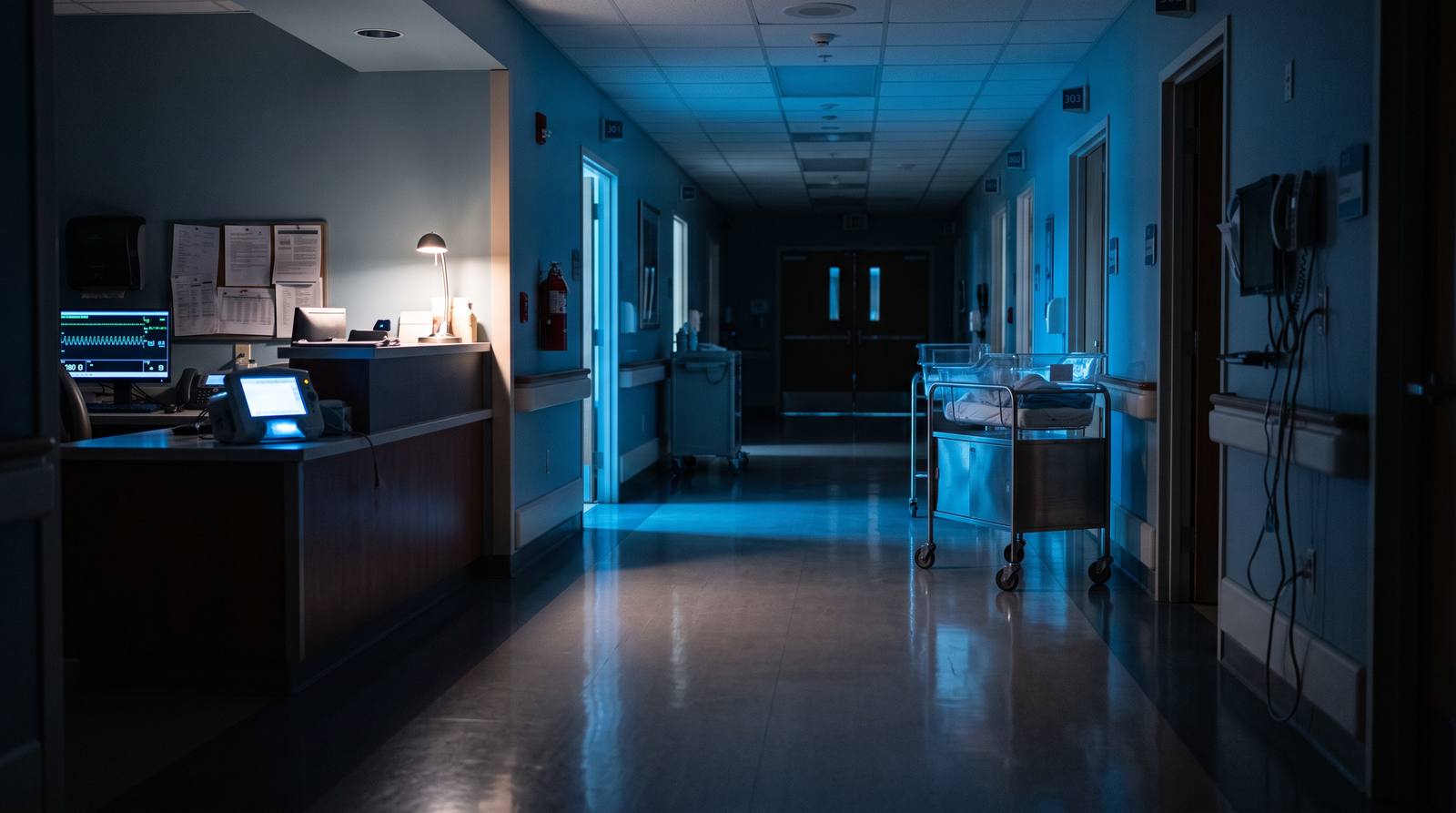

If your baby was born at MemorialCare Miller Children's & Women's Hospital Long Beach, at 2801 Atlantic Avenue in Long Beach, Los Angeles County, and the delivery was difficult, you probably have more questions than answers. Maybe your baby went to the NICU. Maybe a doctor used words like oxygen, brain bleed, nerve injury or cooling treatment. Maybe you are only now noticing that your child is not reaching milestones. This page is written to help you understand what these terms mean and what choices a family has.
This guide is for parents, grandparents and guardians of children born at this hospital. It explains the kinds of injuries that families ask about after a hard birth, the warning signs that matter in the first days, weeks and months, who may be responsible when a birth injury is caused by a medical error, and how an independent expert review of a delivery works. It also covers how to request your own records, where a Los Angeles County case is usually filed, and where to find early help for your child.
Nothing here says that anything went wrong at this hospital or that anyone made a mistake. Many difficult deliveries and many serious newborn conditions happen even when everyone does everything right. The medical information below is general and comes from public health and medical sources. The purpose of this page is simple: to help you ask good questions and to make sure that, if you want answers, you know how to start and that strict deadlines exist.
Was your baby hurt during delivery?
Tell us your name and phone. We call you back today, in English or Spanish, and the consultation is free.
Free consultation · English y Español · No fees or costs unless we win
At a glance: MemorialCare Miller Children's & Women's Hospital Long Beach
| Address | 2801 Atlantic Avenue, Long Beach, CA 90806 |
| County | Los Angeles County |
| Health system / operator | MemorialCare |
| Type of hospital | Private nonprofit hospital |
| Newborns in 2024 | 4,842 (report to the state, HCAI) |
| Licensed NICU beds | 95 |
| NICU level | Level IV |
| Main phone | (562) 933-5437 |
| Hospital website | millerchildrens.memorialcare.org |
Sources: HCAI — 2024 Hospital Annual Utilization Report and the hospital’s own website.
Labor and delivery at Miller Children's & Women's Hospital Long Beach
According to the hospital's own website, labor and delivery is offered today at the Cherese Mari Laulhere BirthCare Center, part of MemorialCare Miller Children's & Women's Hospital Long Beach. The hospital says each patient has a private labor, delivery and recovery suite, that anesthesiologists are in the hospital at all times for medicated births and cesarean deliveries, and that dedicated operating rooms are down the hall from labor and delivery. It also lists an in-house maternal-fetal subspecialist, a neonatologist and an anesthesiologist available around the clock, as well as a high-risk obstetric team.
The hospital is a private nonprofit hospital operated within the MemorialCare system. According to the hospital's 2024 report to the state (HCAI), the hospital cared for 4,842 newborns in its newborn nursery that year. The same report lists 95 licensed intensive-care newborn beds and 927 NICU discharges in 2024. These numbers show a large program that serves many families in Long Beach and the surrounding communities.
The hospital's own NICU page describes a regional Level IV NICU, which it says is the highest designation available in California. The hospital's website also says it has multilingual staff and a high-risk maternal and newborn transport program. We mention these facts only so you know what services exist; they say nothing about any particular delivery. If you want to understand what happened in your own delivery, the records, which we explain below, are where answers begin.
Birth injuries families ask about after a difficult delivery
Hypoxic-ischemic encephalopathy, or HIE, is brain injury from reduced oxygen and blood flow around the time of birth. Newborns with moderate or severe HIE are often treated in a NICU, sometimes with controlled cooling of the body that is started within the first hours of life. HIE can lead to seizures, feeding problems and later developmental needs, but outcomes vary widely. Cerebral palsy is a group of movement and posture conditions caused by abnormal development or damage to the developing brain. The CDC explains that most cases are linked to events before or during birth, and that a lack of oxygen during birth is now thought to explain only a small share. Premature birth, infection, bleeding in the brain and genetic differences are also well-known causes, and in many children the exact cause is never found.
Erb's palsy and other brachial plexus injuries happen when the network of nerves running from the neck to the arm is stretched or torn, most often when a baby's shoulder is hard to deliver. Cleveland Clinic and the National Institute of Neurological Disorders and Stroke explain that a baby may not move one arm, may hold it close to the body, or may lack a startle reflex on that side. Many babies improve with therapy, while others need specialist care or surgery. Newborns can also have bleeding in or around the brain, a broken collarbone or, less often, a skull fracture. Some are mild and heal on their own; others need close monitoring.
Infections and maternal injuries also matter. Group B strep (GBS) is a common bacterium that can pass to a baby during birth and cause serious infection, which is why pregnant women are routinely screened. For mothers, heavy bleeding after delivery (postpartum hemorrhage), tears, infection and complications of a cesarean can cause lasting harm. The facts above are general medical information. Having one of these conditions does not by itself mean that a mistake was made, and this page does not suggest that any of these happened at this hospital.

Warning signs of a birth injury in the first days, weeks and months
In the first days, parents and nurses may notice a baby who is very floppy or very stiff, has a weak or unusual cry, does not feed well, has trouble breathing, has seizures or unusual movements, or does not move one arm or leg. A baby who needed to be resuscitated, who went to the NICU, or whose blood tests showed unusual acid levels may also be watched closely. Keep any discharge papers, and ask the care team to explain in plain words what they saw and what they expect.
In the weeks and months that follow, some signs appear only gradually. Watch for a baby who rarely smiles or follows faces, who is not lifting the head by a few months, who keeps the hands fisted past the early months, who favors one side of the body, who has trouble swallowing, or who seems stiff or limp when held. Missing rolling, sitting, babbling or crawling at the expected ages can also be a sign. Every child develops at a different pace, so a delay is not proof of an injury, but it is a reason to ask.
If something worries you, talk to your child's pediatrician and ask for a developmental evaluation. You do not need to wait for a diagnosis before asking for help. Write down dates, symptoms and what each provider told you. A simple notebook, kept from the first week, can become very useful later, both for your child's care and for anyone who reviews the case.
Free birth-injury case review
We review the delivery records with medical experts and tell you honestly whether there is a case. You pay no fees or costs unless we win.
Who may be responsible in a birth injury claim
When a birth injury is caused by a preventable medical error, more than one person or organization may share responsibility. Depending on the facts, a review could look at the obstetrician or midwife who managed the labor, the nurses who monitored mother and baby, anesthesia providers, the neonatologists and NICU staff, and the hospital itself. A hospital may be responsible for the acts of its own employees, and it may also be responsible for how its systems, staffing and policies worked on the day of the delivery. These are possibilities that an expert would look at, not conclusions.
A common question is what happens when the doctor did not work for the hospital. Many obstetricians, anesthesiologists and neonatologists are independent physicians or belong to a separate medical group that has privileges at the hospital. In that situation, the physician or the group may be responsible for their own care, while hospital nurses and staff are usually hospital employees. Who employed whom, and who was in charge at each moment, is one of the first things a legal review sorts out, and it can change who must receive notice of a claim.
The type of hospital also matters. This hospital is classified as a private nonprofit hospital, so the special rules for county and University of California hospitals do not apply in the same way. Some families, however, deliver at one hospital but are members of a health plan with its own rules. Because deadlines and procedures can be strict, it is wise to have an attorney confirm which rules apply to your family early rather than late.
How an independent expert review of a delivery works
A birth-injury review usually begins with the records. A lawyer can gather the mother's prenatal chart, the labor and delivery notes, the baby's NICU records, and any imaging. The review team then asks qualified, independent medical experts, such as obstetricians, neonatologists, pediatric neurologists and nurses, to read them and answer a basic question: did the care meet the accepted standard, and if not, did that cause the child's condition? No case should move forward until that question has been answered by someone qualified.
Experts look at specific items. The fetal heart monitoring strips show the baby's heartbeat and the mother's contractions across labor. Apgar scores rate the baby's condition at one and five minutes after birth. Cord blood gas results measure acidity and can suggest whether the baby was short of oxygen. Brain MRI and other imaging, EEG results, and the NICU progress notes show how the baby's condition developed in the first hours and days. Experts compare these records with the timeline of who did what and when.
The result may be that the care was appropriate and that the condition was not preventable. That is a real and common answer, and it can be a relief to hear it from an independent person. In other cases, the review may find questions that deserve a formal claim. A good review is slow and careful, and it should explain its reasoning in plain language. It costs you nothing to ask, and you are not obligated to take action after a review.
What families can do now: a step-by-step list
First, take care of your child. Keep every medical appointment, follow your child's therapy plan, and keep a notebook of symptoms, dates, names of providers and medicines. Second, request your own medical records and your baby's records. You are entitled to them, and getting them early protects you if a hospital archives older files. Ask for the full chart, including the fetal monitoring strips, and the NICU chart as a separate request.
Third, write down your own memory of the delivery while it is fresh: who was in the room, what you were told, how long things took. Do not post details on social media. Fourth, avoid signing releases or giving recorded statements to insurance representatives before you understand what you are signing. Fifth, speak with a lawyer who handles birth-injury cases about the strict deadlines, including written notice that must be given before certain medical claims, and special rules that apply for public hospitals and for members of some health plans such as Kaiser Permanente.
Sixth, ask about the costs. Many birth-injury firms offer a free first conversation and take cases on a contingency basis, meaning no fee unless there is a recovery, but you should ask each firm to explain its terms in writing. Finally, remember that starting a conversation is not the same as starting a lawsuit. Learning your options early simply keeps all of them open.
Support for your child while the case is reviewed
Your child's care should never wait for a legal review. Early intervention, which means physical, occupational and speech therapy and developmental services, can make a real difference, especially in the first three years. In California, the Early Start program serves babies and toddlers under three with a developmental delay or a condition likely to cause one. In Long Beach, that program is arranged through the regional center, which we describe below. Pediatric specialists in neurology, orthopedics and rehabilitation may also be part of your child's team.
Many families also look at public coverage. Medi-Cal may help pay for medical care and therapies for eligible children, and California Children's Services (CCS) is a state program that can cover care for certain serious conditions. Eligibility depends on your income, your child's diagnosis and other factors, so ask your pediatrician, social worker or the county office what applies to you. Nothing here is a promise of coverage or of any result.
Caring for a child with special needs is exhausting. Parent support groups, hospital social workers and your regional center service coordinator can help with practical needs, from equipment to respite care. A legal review, if you choose one, is meant to run alongside this support and not to replace it.
Deadlines for a birth-injury case in California
California gives a child’s birth-injury case its own deadline. Under Code of Civil Procedure § 340.5, a minor must sue within three years of the wrongful act, but a child who was under six when it happened has until his or her eighth birthday if that is longer. For a baby hurt during labor or delivery, that usually means the eighth birthday. The clock runs from the act itself, not from the day the family learned what went wrong, and it is paused only in narrow cases of fraud or collusion. Parents’ own claims, and claims against a public hospital, can have much shorter deadlines, so it is safer to get advice early.
Before a medical malpractice lawsuit can be filed in California, the doctor or hospital must get written warning. Under Code of Civil Procedure § 364, the health care provider must receive at least 90 days’ notice of the intention to sue. No special form is required, but the notice must state the legal basis of the claim, the type of loss and the specific injuries suffered. Under § 364(d), if the notice is served within the last 90 days of the filing deadline, the deadline is extended 90 days from the date of service. The notice is a required step, and it is often the moment a case moves from questions to formal action.
What MICRA caps — and what it does not
California’s MICRA law limits one part of a medical malpractice recovery. Under Civil Code § 3333.2, as amended by AB 35, non-economic damages (pain, suffering, loss of enjoyment of life) are capped. In 2026 the cap is $470,000 for injury and $650,000 for wrongful death, and it rises every January 1 ($40,000 and $50,000 a year until 2033, then 2% a year). Separate caps can apply to doctors, hospitals and unaffiliated providers. Economic damages are not capped: lifetime medical care, therapy, equipment, home modifications and lost earning capacity can be recovered in full, and in a birth-injury case they are usually the largest part of the claim.
How to get the delivery records from Miller Children's & Women's Long Beach
California law gives families a right to these records. Under Health and Safety Code § 123110, a patient or the patient’s personal representative — for a baby, a parent or guardian (§ 123105) — may inspect the records within five working days of a written request and is entitled to a paper or electronic copy, which the provider must send within 15 days after receiving a request that says which records are wanted. For a birth-injury review, ask for both charts: the mother’s labor and delivery record, including the fetal heart rate monitoring strips, and the baby’s newborn and NICU record.
To get the records from this hospital, ask the MemorialCare Medical Records Department, which handles requests for MemorialCare Long Beach Medical Center and Miller Children's & Women's Hospital. MemorialCare's website says the fastest way to see records is the MyChart patient portal, and it also offers a records requester portal and an Authorization to Use and Disclose Protected Health Information form, available in English and Spanish, that can be sent by mail, fax or email. The department's phone line, (657) 241-7001, is answered Monday through Friday from 8:00 a.m. to 4:00 p.m., except holidays. Ask for the complete labor and delivery chart for the mother, the baby's newborn and NICU chart, and the fetal heart monitoring strips as separate items, and keep a copy of everything you send.
The hospital’s medical records page →
Where a case from Long Beach would be filed
A birth-injury case that arises in Los Angeles County and is worth more than the limited-civil amount is normally an unlimited civil case in the Superior Court of California, County of Los Angeles. According to the court's website, the personal injury hub courtrooms are at the Spring Street Courthouse, 312 North Spring Street, Los Angeles, CA 90012. Where a specific case is filed and assigned depends on the facts and on the court's current rules, so a lawyer will confirm the correct location before anything is filed.
Spring Street Courthouse, Superior Court of California, County of Los Angeles → — 312 North Spring Street, Los Angeles, CA 90012
Help for your child now: Early Start in Los Angeles County
Babies and toddlers under three who have a developmental delay or a condition likely to cause one may qualify for Early Start, California's early intervention program. Harbor Regional Center, a nonprofit funded by the state, serves the Long Beach health district according to the Department of Developmental Services (dds.ca.gov). You do not need a lawyer, a diagnosis or a referral from a doctor to call and ask for an evaluation. Contact Harbor Regional Center at (310) 543-0100 or through harborrc.org, say that you are worried about your child's development, and ask to begin an Early Start intake.
Key facts
- According to the hospital's own website, MemorialCare Miller Children's & Women's Hospital Long Beach offers labor and delivery at 2801 Atlantic Avenue in Long Beach.
- According to the hospital's 2024 report to the state (HCAI), it cared for 4,842 newborns in its nursery and reported 95 licensed NICU beds and 927 NICU discharges.
- A difficult delivery or a NICU stay does not by itself mean that anyone made a mistake; an independent expert review of the records is how families find out.
- California sets strict deadlines for birth-injury cases, and some are much shorter than a child's own deadline, so it is safer to ask for advice early.
- You have a legal right to your own and your baby's medical records, and your child can start Early Start services without waiting for a lawyer or a court.
Questions parents ask
Can I file a birth-injury claim against Miller Children's & Women's Hospital Long Beach?
A family can ask a lawyer to review a delivery at any hospital, including this one. Whether a claim is possible depends on what the records and independent medical experts show about the care and about whether it caused the injury. A review costs nothing to ask for, and it does not mean that anyone did anything wrong.
How long do I have to file a birth-injury claim in California?
California gives a child's birth-injury case its own deadline, which is longer than many other injury cases but is counted from the act itself, not from the day you learned about a problem. Parents' own claims can have much shorter deadlines, and a written notice must be given before most medical malpractice suits. Because the rules are strict, it is safer to get advice early.
Is Miller Children's & Women's Hospital Long Beach a public hospital?
No. It is classified as a private nonprofit hospital within the MemorialCare system, not a county or University of California hospital. The special six-month claim rules for public hospitals do not apply in the same way, but a lawyer should confirm the rules that fit your situation, including your health plan.
What if my doctor did not work for the hospital?
Many obstetricians, anesthesiologists and neonatologists are independent physicians or belong to separate medical groups. In that case, the physician or group may be responsible for their own care, while hospital nurses and staff are usually hospital employees. A legal review sorts out who employed whom and who must receive notice.
How do I get my fetal monitoring strips from Miller Children's & Women's Hospital Long Beach?
Contact the MemorialCare Medical Records Department at (657) 241-7001 and send the authorization form, which is available in English and Spanish, by mail, fax or email, or use MemorialCare's online records requester portal. Ask in writing for the fetal heart monitoring strips along with the labor and delivery chart and the NICU chart. California law gives parents a right to these records.
Does it cost anything to talk to a lawyer about a birth injury?
Many birth-injury law firms, including ours, offer a free first conversation and work on contingency, which means no fee unless there is a recovery. Costs and fees differ by firm, so ask for the terms in writing. Talking to a lawyer does not commit you to filing a case.
Ask a question
Not ready to call? Write your question and a member of our team answers you — no cost, no commitment.
Other Los Angeles County hospitals we cover
Los Angeles birth injury lawyers →
MemorialCare Miller Children’s & Women’s Hospital Long Beach Birth Injury Lawyers — Beverly Law
Free case review for families in Long Beach. We obtain the delivery records, have them reviewed by medical experts and deal with the hospital and its insurer — you focus on your child. You pay no fees or costs unless we win.
Related pages
Cerebral Palsy · Erb’s Palsy / Brachial Plexus Injury · HIE / Oxygen Deprivation at Birth · Statute of Limitations · MICRA Damages Cap · All California hospitals · California birth injury lawyers · Birth injury guides
Sources
- HCAI — 2024 Hospital Annual Utilization Report (final, October 2025)
- Miller Children's & Women's Hospital Long Beach: Labor & Delivery — Labor and delivery is offered; suites, anesthesia, operating rooms and specialist coverage.
- MemorialCare: Neonatal Intensive Care at Miller Children's & Women's Hospital Long Beach — The hospital's description of its regional Level IV NICU.
- HCAI: MemorialCare Miller Children's & Women's Hospital Long Beach — State (HCAI) page for the hospital's official name, address and operator.
- MemorialCare: Medical Records and Forms — How to request records, the authorization form, MyChart and the records requester portal.
- Superior Court of Los Angeles County: Spring Street Courthouse — Courthouse address; personal injury hub courts.
- California Department of Developmental Services: Regional Center Listings — Harbor Regional Center serves the Long Beach health district.
- CDC: Risk Factors for Cerebral Palsy — Most cerebral palsy is linked to events before or during birth; causes and risk factors.
- NICHD: What causes cerebral palsy? — Causes of cerebral palsy, including brain bleeding, infection and lack of oxygen.
- NINDS: Brachial Plexus Injury — What brachial plexus injuries are and how they affect the arm.
- Cleveland Clinic: Erb's Palsy — Newborn signs and outlook for Erb's palsy.
- Code of Civil Procedure § 340.5
- Code of Civil Procedure § 364
- Civil Code § 3333.2 (as amended by AB 35, 2022)
- Health and Safety Code § 123110 (patient access to records)
Beverly Law is an independent law firm. We are not affiliated with, endorsed by or speaking for MemorialCare Miller Children's & Women's Hospital Long Beach or MemorialCare. Hospital facts on this page come from the public sources listed above.
Important: This page is general information about birth injuries and California law, not legal advice, and reading it does not create an attorney-client relationship with Beverly Law. Every case is different — talk to a lawyer about your own situation. Attorney advertising. Prior results do not guarantee a similar outcome. No fees or costs unless we win. Last reviewed: 2026-09-18.